Kinchega Woolshed, Heritage-listed former shearing shed in Kinchega National Park, New South Wales, Australia
Kinchega Woolshed is a heritage sheep shearing building in a national park near Menindee with 26 shearing stands in a timber-framed structure covered by corrugated iron and supported by red gum trunks. The structure preserves the original layout of a working wool station with multiple work areas and support rooms.
The property, first called Menindel and held by explorer John McKinlay in the 1850s, was taken up by Peter McGregor by 1860 and became known as Kinchega. Herbert Bristow Hughes bought the station from George Urquhart in 1870 and had steam engines installed in 1875, the year the present shed was built. The Hughes family kept Kinchega for almost a century; in 1967 the shed became part of Kinchega National Park.
The building shows how wool production shaped Australian rural life through its preserved equipment, including presses and the original steam engine that powered operations. Visitors can see how these machines were part of daily work at a large working station.
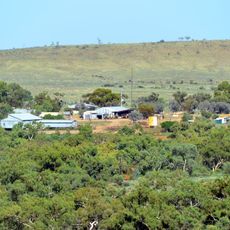
The shed stands on a low sandy hill close to the Darling River, 15 km south-west of Menindee township, reached by road through Kinchega National Park. A cluster of small corrugated iron buildings nearby held the shearers' quarters, cookhouse and stores. The ground is exposed and shade is scarce, so carry water and sun protection.
The sweating pens at the southern end were not waiting areas: sheep were held there to sweat before shearing, which softened the wool and made it easier to cut. Their light stud-frame construction contrasts with the heavier timber of the original 1875 section, and the pens are singled out in the heritage listing as an important feature of the building.
The community of curious travelers
AroundUs brings together thousands of curated places, local tips, and hidden gems, enriched daily by 93,444 contributors worldwide.