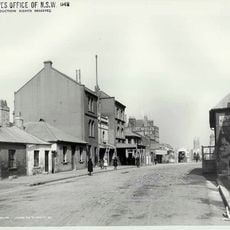
Cumberland Street Archaeological Site, Archaeological site in The Rocks, Sydney, Australia
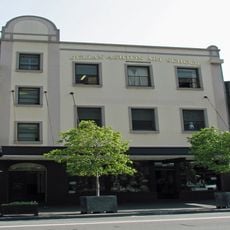
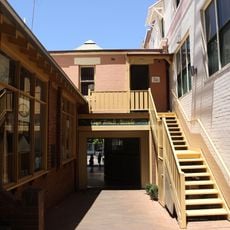
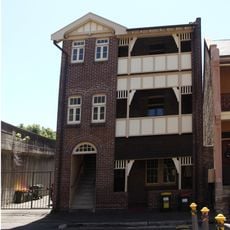
The Cumberland Street Archaeological Site occupies two former town blocks, Sections 74 and 75, at 106–128 Cumberland Street in The Rocks. Excavated in 1994, it preserves foundations, cesspits and yard surfaces of convict-era and later housing, with a youth hostel raised on supports above the remains.
Europeans occupied the site from at least 1795, when George Legg and Ann Armsden lived here; the Byrne family followed in 1805. From 1811 to 1829 George Cribb's butchery and hotel covered over half the block, and Sections 74 and 75 were subdivided in the 1830s and 1840s. The government resumed the land in 1900–1902 and demolished 30 buildings by 1915; a concrete bus-depot slab covered the site until excavation in 1994.
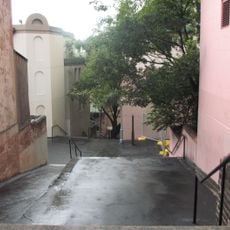
Lanes on the site carry the names of residents: Cribbs Lane recalls convict butcher George Cribb, who ran a butchery and pub from the Gloucester Street corner from 1808, and Carahers Lane recalls Owen Caraher, making candles and soap in the 1860s. A bakery on the Cumberland and Cribbs Lane corner let neighbours use its ovens for Sunday dinners, rare in private homes.
The excavated remains sit below the elevated Sydney YHA hostel at 106–128 Cumberland Street, so the trenches themselves are not entered on a casual visit. The Big Dig Education Centre runs on the site, and interpretation of the 1994 excavation is available to groups booking ahead. Cumberland and Gloucester Streets frame the block, with Cribbs Lane and Carahers Lane cutting through it.
Convict butcher George Cribb, transported on the Admiral Gambier in 1808, ran his butchery and a pub from the corner of Gloucester Street and Cribbs Lane until the later 1820s. The lane beside his shop still carries his name.
The community of curious travelers
AroundUs brings together thousands of curated places, local tips, and hidden gems, enriched daily by 94,410 contributors worldwide.