Clifford House, Toowoomba, Historic residence in Toowoomba, Australia.
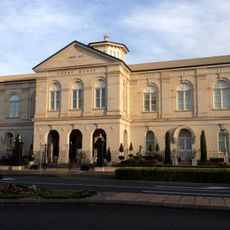
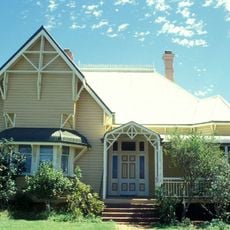
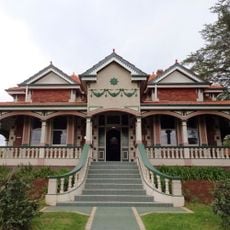
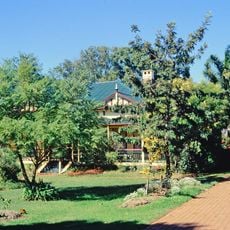
Clifford House is a two-storeyed sandstone, brick and timber building at 120 Russell Street, with corrugated iron roofs, several chimneys, timber verandahs above a sandstone entrance portico, and a parapet bearing the name "Clifford House". A single-storeyed brick billiard room stands to the west, linked by an enclosed walkway with a barrel-vaulted corrugated iron roof.
James Taylor sold the Russell Street land in 1865 to a group of squatters, including himself, who planned a gentlemen's club modelled on Brisbane's Queensland Club. The club failed financially and Taylor bought it back in 1870, renaming it Clifford House after his father's English birthplace. Builder Richard Godsall carried out grand alterations, and a billiard room by architect James Marks followed in 1883.
The building displays hand-painted doors, marble tiles, and pressed metal ceilings from the Victorian era. These crafted details remain visible today and show how skilled artisans worked during the late 1800s.
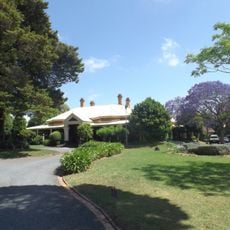
The building stands on a block bounded by Russell Street, Clifford Lane and Isabel Street, set back from the road behind a circular drive. The ground floor was refurbished in 1993 and leased to the Queensland Government, so the interior is not a public museum. Visitors can view the northern facade, its parapet lettered "Clifford House", and the gardens from the street.
The building was nicknamed "St James' Palace" after James Taylor had it reconditioned as Clifford House in 1870, named after his father's birthplace in England. Builder Richard Godsall, later Mayor of Toowoomba, carried out the alterations, described as being of a very grand scale.
The community of curious travelers
AroundUs brings together thousands of curated places, local tips, and hidden gems, enriched daily by 93,531 contributors worldwide.