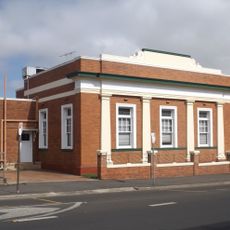
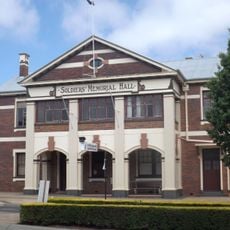
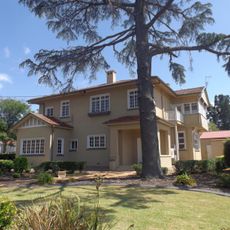
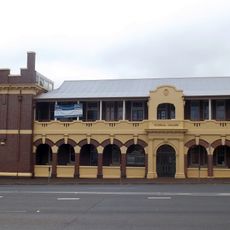
St Luke's Church Hall, Heritage-listed church hall in Toowoomba, Australia.
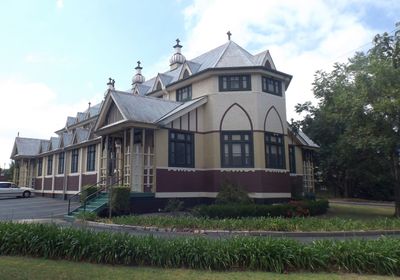
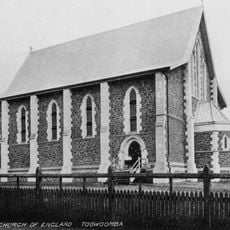
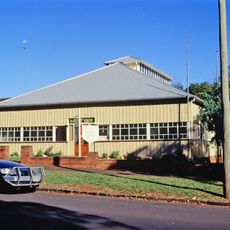
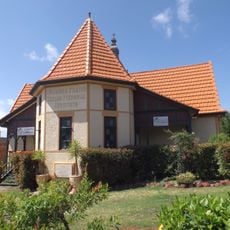
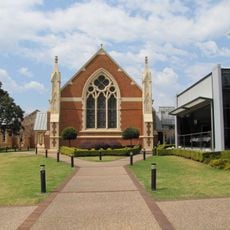
St Luke's Church Hall is a single-storey building, 80 feet (24 m) long and 40 feet (12 m) wide, with a plan resembling a church: a nave and side aisles, and gable-roofed porches at each end. Its walls are cement applied over chicken wire on a timber frame, and the foundations are brick.
Construction began with the foundation stone laid in May 1910, and the building opened to the public in April 1911 under the design of architect H.J. Marks. The project responded to the expanding needs of the Anglican community and reflected the growth of religious institutions across the region during the early 1900s.
This space served as a gathering place for the local Anglican community and reflects how religious institutions shaped community life on the Darling Downs. People gathered here for worship and various social events that strengthened connections within the town.
The hall is straightforward to navigate, with clear spatial layout that helps visitors understand the building's organization. Keep in mind that this remains an active community space, so it is best to visit when public access is available and respect any ongoing programs.
The hall's walls are cement trowelled over chicken wire on a timber frame, a patented system Harry Marks also used at the Taylor Memorial Institute and The Glennie School. The foundation stone, laid 28 May 1910 by Archdeacon Henry le Fanu, is inscribed to the memory of Benjamin Glennie, who bought the land for £8 in 1854.
The community of curious travelers
AroundUs brings together thousands of curated places, local tips, and hidden gems, enriched daily by 94,362 contributors worldwide.