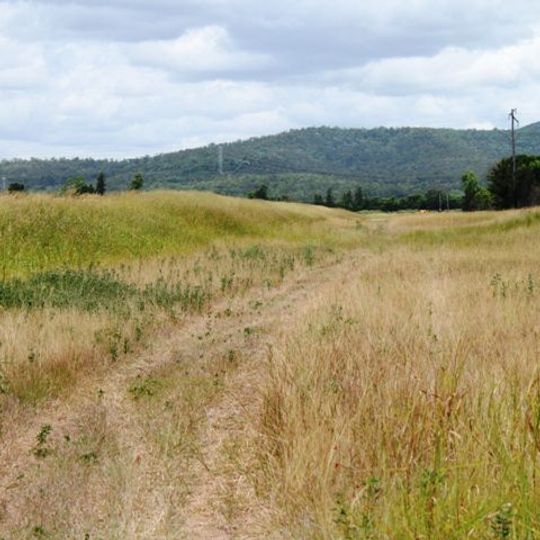
Corduroy Road Remains, Archaeological remains of colonial road in Laidley, Australia
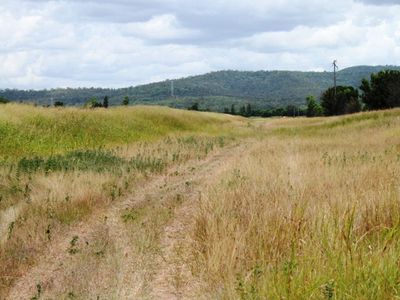
The Corduroy Road Remains are the buried remnants of the former main dray road between Ipswich and Drayton, upgraded from a track to a corduroy road in the 1850s and 1860s. The surface was built of grey ironbark logs (Eucalyptus drepanophylla) laid transversely and covered with sand, now lying beneath 100 to 200 millimetres of soil at Toowoomba-Ipswich Road, Laidley.
The road was built between the 1850s and 1860s and served as the main link between Ipswich and Drayton for wool carts and supplies. It was a key piece of infrastructure for moving goods across the region during colonial times.
The name comes from the corduroy texture made by overlapping full or half rounds of grey ironbark (Eucalyptus drepanophylla) laid transversely across the boggy ground. The method was already common in 18th-century Europe and post-colonial America before being used here in the 1850s–1860s, when labour and money were scarce and no engineer was needed, unlike plank roads. A surveyor in 1859 described the flat site as "lightly inundated", with gum and ironbark growing nearby.
The site is protected status and visitors should treat it with care to help preserve what remains underground. It helps to learn about local guidelines before visiting to understand what you are seeing.
The road's logs were grey ironbark (Eucalyptus drepanophylla), and the remains lie buried under only 100 to 200 millimetres of soil, which has blocked attempts to judge their condition or surviving length. In the 1970s the former Shire of Laidley proposed surveying the road and exposing a short section for public viewing, but no work was done.
The community of curious travelers
AroundUs brings together thousands of curated places, local tips, and hidden gems, enriched daily by 93,541 contributors worldwide.