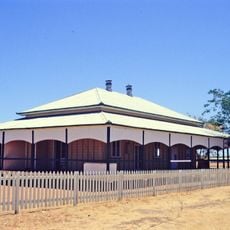
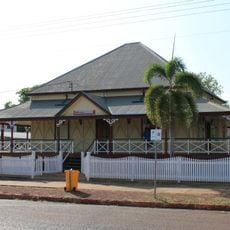
Golden Gate Mining and Town Complex, Heritage-listed mining settlement in Croydon, Australia
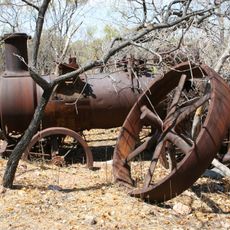
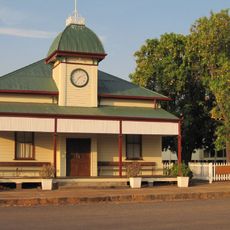
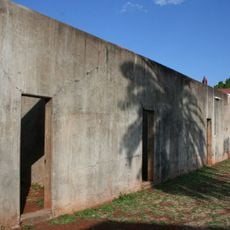
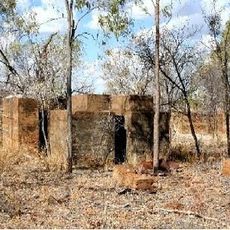
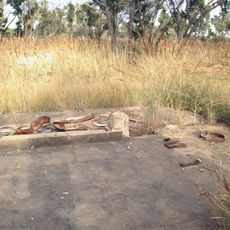
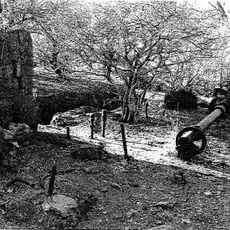
The Golden Gate Mining and Town Complex lies on the Normanton Road (Gulf Developmental Road) northwest of Croydon and covers the Golden Gate reef, worked over a length of 2.5 kilometres, together with the surveyed township site, the Golden Gate Cemetery and the Croydon Consols battery and cyanide plant. Shafts, winding and pumping machinery sites and the remains of the camp record quartz mining from 1886 to 1922.
The Golden Gate reef was first worked in 1886 but abandoned in 1887; work resumed in 1891 and production continued until a decline in 1915. The township was surveyed in 1893, though buildings predated the survey, and its population fell until it was deserted in 1922. The reef yielded 483,000 ounces of gold between 1886 and 1911, more than one-third of the entire Croydon field.
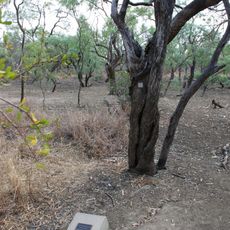
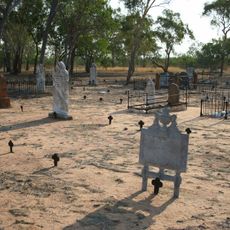
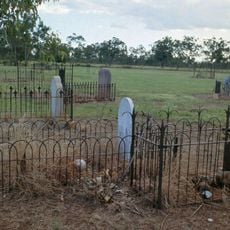
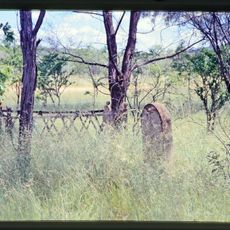
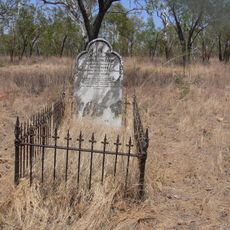
The cemetery with its nineteen graves reflects how people lived and worked in this remote gold mining region of northern Queensland. The burial site shows the real human cost of pursuing wealth in such an isolated place.
The complex lies along the Normanton Road (Gulf Developmental Road) about 8 km northwest of Croydon, with mine shafts, the Croydon Consols battery and cyanide plant, and the Golden Gate Cemetery among the remains. Ground is uneven and unpaved, so sturdy footwear and drinking water are needed; the cemetery's nineteen graves are the most easily reached feature.
James Rogers, an Irishman who came to Croydon from Charters Towers in 1889 and later served as mayor, owned and developed several mines on the Golden Gate reef. A government subsidy for deep sinking in 1894 paid off in 1896 with a find of 3,800 ounces at 120 feet. An English company then bought the mine, and Rogers kept one fifth of the shares.
The community of curious travelers
AroundUs brings together thousands of curated places, local tips, and hidden gems, enriched daily by 92,856 contributors worldwide.