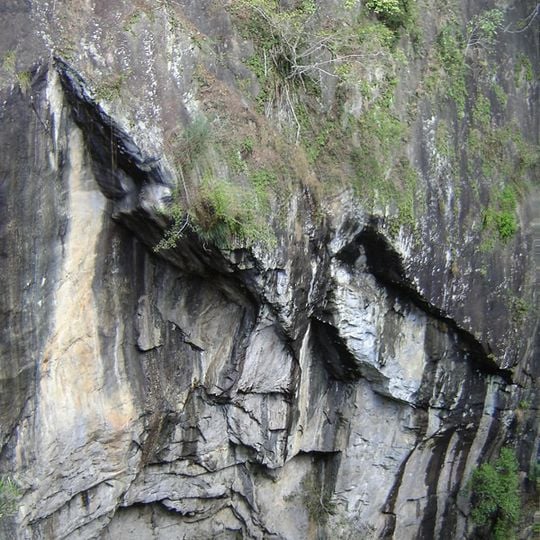
Mount Hypipamee crater, Volcanic diatreme in Atherton Tablelands, Australia.
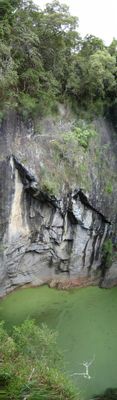
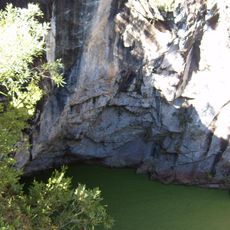
Mount Hypipamee is a volcanic crater in the Atherton Tablelands with walls that drop 82 meters and span 61 meters across, composed of exposed granite that descends into a water-filled base. The crater floor is characterized by a persistent green surface of floating plant growth covering the water.
The crater was discovered in 1879 when a gold prospecting group led by Weate nearly fell into its opening while exploring the Mulgrave River area. This accidental finding made it one of the region's notable geological features.
The name comes from the Aboriginal word 'nabbanabbamee', connected to a story about two men who vanished after cutting down a sacred tree. Local traditions continue to shape how people understand and experience this place in the landscape.
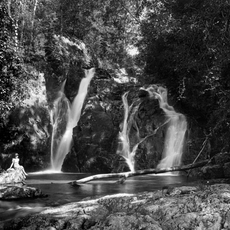
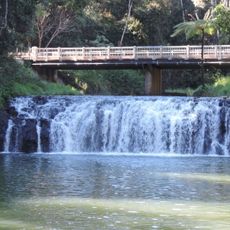
Two walking paths lead through the national park: an 800-meter trail to the crater viewing platform and a 1.2-kilometer loop past Dinner Falls. Both tracks are well marked and offer different ways to experience the site.
The water surface at the crater base is constantly covered with duck weed that forms a distinct green layer. This floating plant growth is visible from the observation points above and gives the crater a memorable characteristic.
The community of curious travelers
AroundUs brings together thousands of curated places, local tips, and hidden gems, enriched daily by 91,135 contributors worldwide.