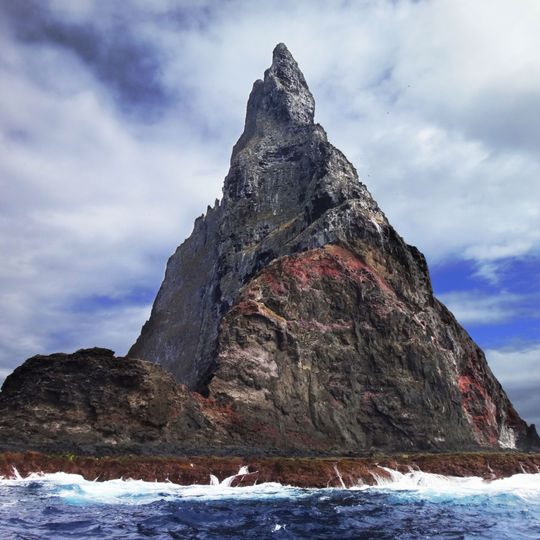
Ball's Pyramid, Volcanic sea stack in Lord Howe Island Group, Australia
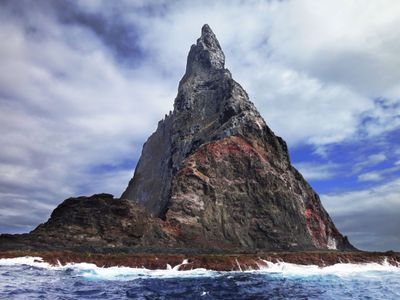
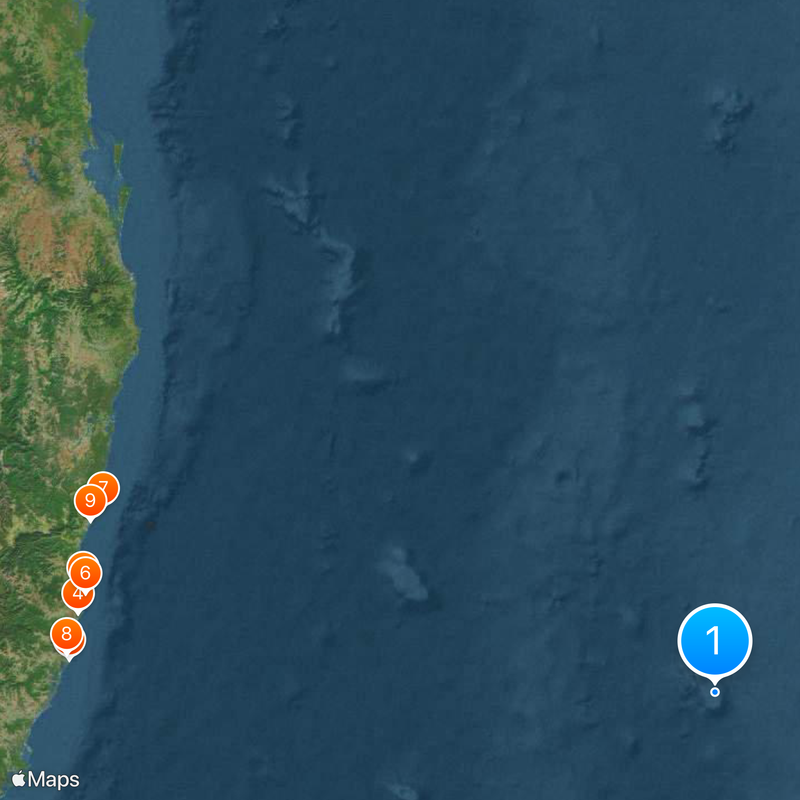
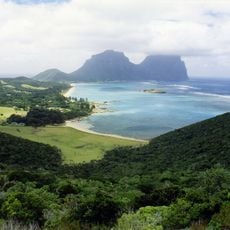
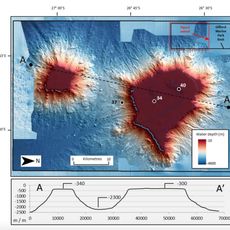
Ball's Pyramid is a basalt sea stack located roughly 20 kilometers southeast of Lord Howe Island in Australia. The narrow rock pinnacle rises steeply from the water and its rugged walls drop almost vertically into the ocean.
This formation emerged roughly seven million years ago through volcanic activity and is a remnant of a larger shield volcano. British explorer Henry Ball documented the location in the late 18th century during his voyage through the region.
Locals sometimes call this formation the world's tallest sea stack and recognize its role as a landmark for seabirds. Climbers from around the world regard the summit as one of the most demanding rock routes in the southern Pacific.
Visitors must apply for a permit from the New South Wales environment authority and can only reach the site with authorized boats. Rough sea conditions limit trips to calm days and landing is allowed exclusively for research purposes.
Researchers rediscovered here the last living specimens of a stick insect species thought extinct since the 1920s. This population lives in a small shrub on the northwest side and consists of only a few dozen individuals.
The community of curious travelers
AroundUs brings together thousands of curated places, local tips, and hidden gems, enriched daily by 92,057 contributors worldwide.