Air Force Maui Optical and Supercomputing observatory, Astronomical observatory at Haleakala Observatory, United States
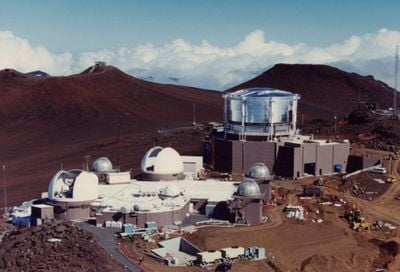
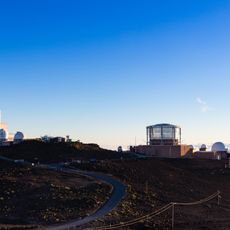
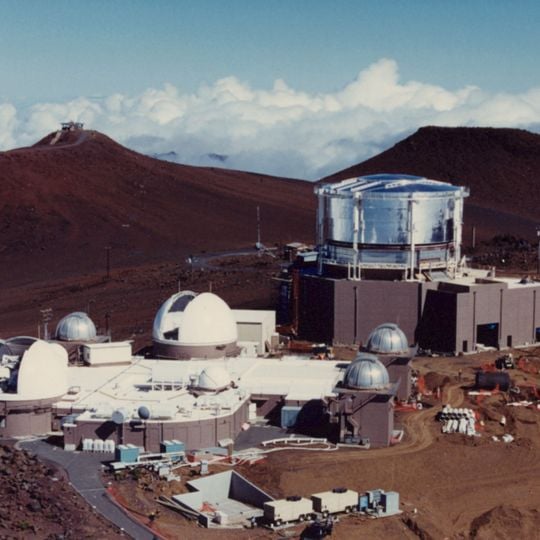
The Air Force Maui Optical and Supercomputing Observatory is a research facility on Haleakala that operates multiple telescopes and sensors to track satellites and gather data about deep-space objects. The installation combines optical instruments with computing centers to process large amounts of information collected from space surveillance activities.
The facility began in 1961 as the ARPA Midcourse Optical Station, proposed by R. Zirkind to image ballistic missile payloads and satellites in the infrared. Design was finished in 1963 and construction by the Army Corps of Engineers was complete by 1967. The Air Force took charge in 1969, DARPA transferred it in 1984, and it was renamed the Maui Space Surveillance System in 1995.
The name AMOS, for Air Force Maui Optical Station, has stayed in use at technical conferences for over thirty years, and the main-belt asteroid 8721 AMOS carries the project's name. The site also hosts the Maui High Performance Computing Center at the Maui Research and Technology Park in Kihei, serving Defense Department, government, university and commercial users.
The high-altitude location requires acclimatization and warm clothing, as weather can change quickly at that elevation. Visitors should note this is a military research facility and access may be restricted.
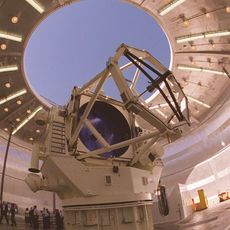
The 75-ton AEOS telescope's light is routed through mirrors into seven independent Coudé focus rooms below, so several research groups can use it at once. Its adaptive optics system centres on a 941-actuator deformable mirror that corrects atmospheric distortion.
The community of curious travelers
AroundUs brings together thousands of curated places, local tips, and hidden gems, enriched daily by 92,785 contributors worldwide.