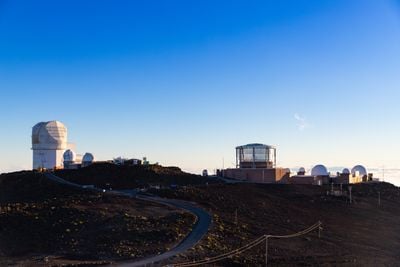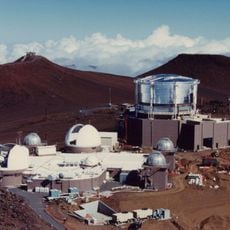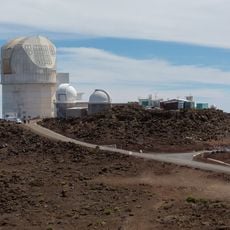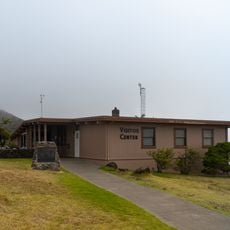
Haleakalā Observatory, Astronomical observatory at Haleakalā summit, Maui County, United States.
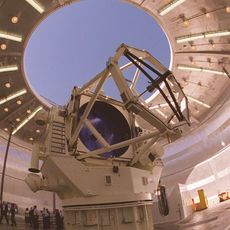
Haleakalā Observatory is a research facility located on a summit on Maui that operates multiple telescopes for studying the sky and sun at high elevation. The site focuses on solar research and systematic sky surveys using advanced equipment.
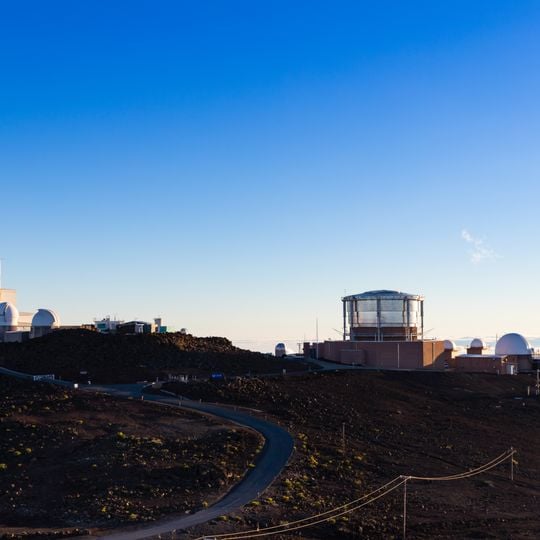
The site hosted a Baker-Nunn telescope from 1957 to 1976 for Project Space Track, and the Mees Solar Observatory was dedicated in 1964. The Lunar Ranging Experiment ran from 1974 to 2004; its domes now hold the Pan-STARRS PS1 and PS2 telescopes.
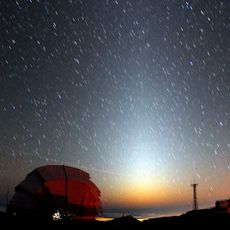
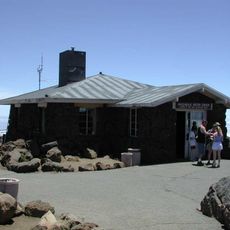
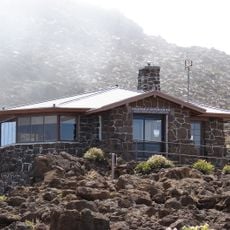
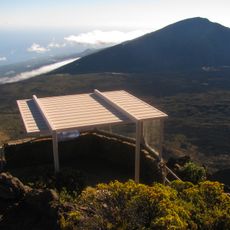
The observatory sits within Haleakalā, whose name is usually translated as 'House of the Sun'. The summit is above one third of the troposphere, and under very clear conditions the complex can be seen from Makakilo on Oahu, over 200 km away. A small building on the site is used by the Haleakalā Amateur Astronomers.
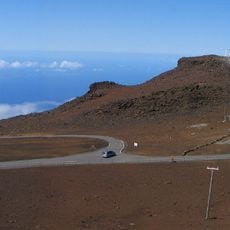
The site sits above 3,050 meters on the Haleakalā summit, where the air is thin and weather shifts quickly; allow time to acclimatise before walking around. The observatory buildings are working research facilities and are not open to the public, so the telescopes are seen from outside. The paved summit road curves past the site, with a low post-and-wire fence along the roadside.
The site's oldest instrument was a Baker-Nunn telescope, run from 1957 to 1976 for Project Space Track; the Lunar Ranging Experiment then used two domes from 1974 to 2004, and Pan-STARRS PS1 and PS2 now occupy those same domes.
The community of curious travelers
AroundUs brings together thousands of curated places, local tips, and hidden gems, enriched daily by 92,790 contributors worldwide.