Yentna River, Alaskan river tributary in Susitna Valley, US.
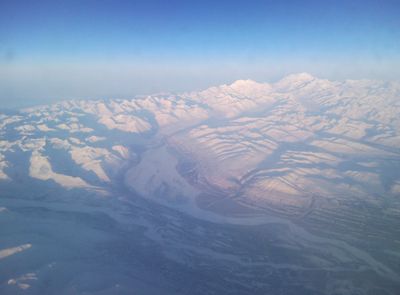
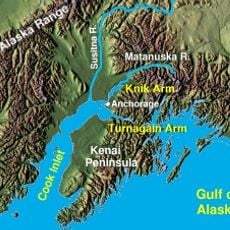
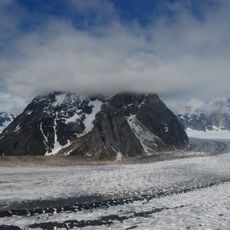
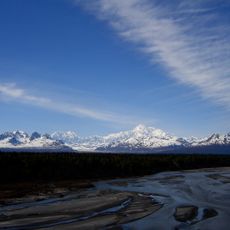
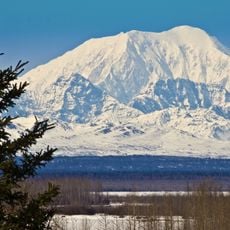
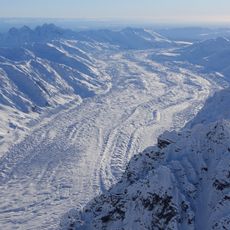
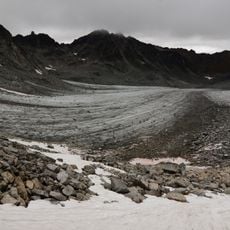
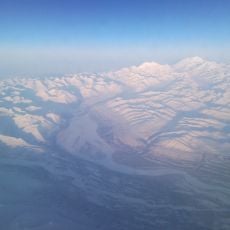
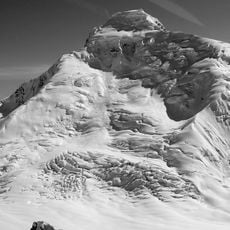
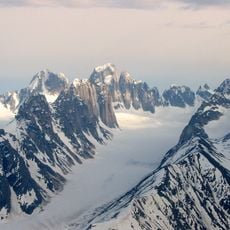
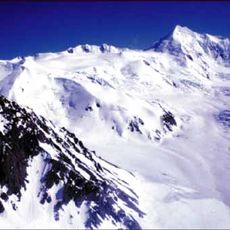
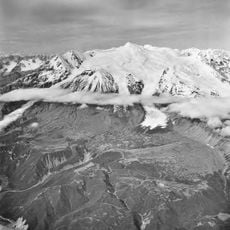
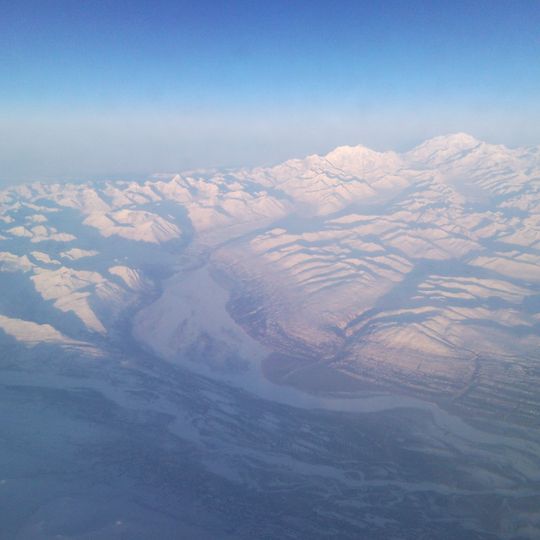
The Yentna River forms at the junction of its East and West Forks on the southeast flank of the Alaska Range and runs about 130 km south-southeast to the Susitna River near the settlement of Susitna. Its basin covers roughly 16,000 km², with a mean discharge of about 575 m³/s. The West Fork drains the north side of the Kichatna Mountains, while the East Fork rises at the foot of the Yentna Glacier, with the Dall Glacier ending a few kilometres downstream.
The river's Tanaina (Dena'ina) name was recorded by the geologist J. E. Spurr of the United States Geological Survey in 1900. It has also been called Johnson River, after the first white man known to have ascended it. Since the 1970s the Iditarod Trail Sled Dog Race has followed the Yentna for about 40 miles from its mouth on the Susitna up to the Skwentna River, with its first checkpoint, Yentna Station, on the left bank.
The river holds the name Yentnu in the Dena'ina language and has long served as a gathering place for fishing and food harvesting for local communities. People still rely on its salmon runs as part of their way of life in the region.
Access to the river can be challenging due to Alaska's harsh climate and changing water conditions, as sediment levels and flow rates shift regularly. Visitors should prepare for difficult terrain and pay attention to local guidance about safe approach and travel.
The Iditarod Trail Sled Dog Race follows the Yentna River for about 40 miles, from its mouth at the Susitna River up to the Skwentna River tributary. The race's first checkpoint, Yentna Station, sits on the river's left bank.
The community of curious travelers
AroundUs brings together thousands of curated places, local tips, and hidden gems, enriched daily by 92,777 contributors worldwide.