Mount Susitna, Mountain summit near Anchorage, United States
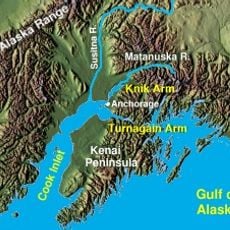
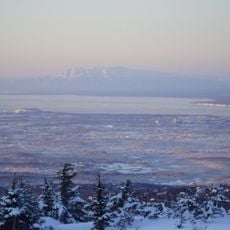
Mount Susitna is a prominent peak standing on the western bank of the lower Susitna River, roughly 33 miles northwest of Anchorage. Its streamlined form creates a distinctive silhouette that dominates views across the Knik Arm from nearby communities.
Mount Susitna is a roche moutonnée, a teardrop-shaped bedrock form smoothed by a glacier flowing over it. Its streamlined shape dates from the earliest of the five documented glaciations in the Anchorage area, named the Mount Susitna glaciation, in the late Pliocene to early Pleistocene, 2–6 million years ago. The mountain is part of a suite of Jurassic plutons of quartz monzonite to granodiorite.
The Dena'ina name Dghelishla means "Little Mountain"; the English name comes from the Susitna River, meaning "Sandy River". The Sleeping Lady nickname comes from a legend of a giant woman who vowed to sleep until her beloved returned from battle; Nancy Lesh first printed it in 1962, and Ann Dixon retold it in a 1994 picture book. In "A Dena'ina Legacy", elder Peter Kalifornsky says her relatives became Mount Redoubt, Mount Iliamna, the Chigmit Range and Denali.
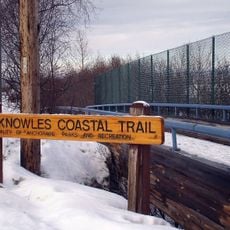
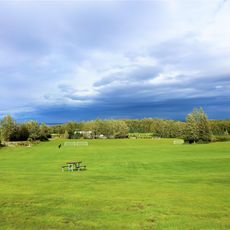
This summit is best observed from Elderberry Park and the Tony Knowles Coastal Trail, both providing clear sightlines across the Knik Arm. Clear weather offers the most rewarding views of the peak's distinctive form.
The mountain's Dena'ina name, Dghelishla, means "Little Mountain", while the English name comes from the Susitna River, meaning "Sandy River". The earliest glaciation documented around Anchorage is named the Mount Susitna glaciation after the erratics and glacial features found on its summit.
The community of curious travelers
AroundUs brings together thousands of curated places, local tips, and hidden gems, enriched daily by 92,722 contributors worldwide.