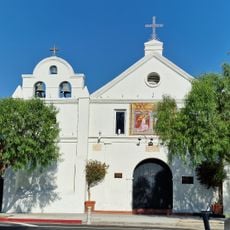
Avila Adobe, Adobe residence in Los Angeles Plaza Historic District, United States.
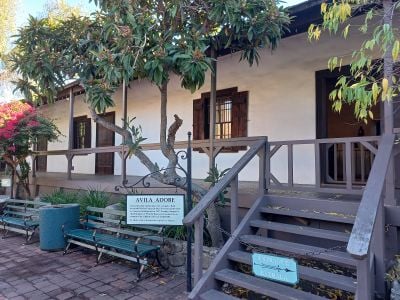
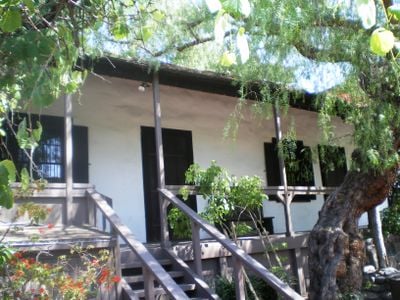
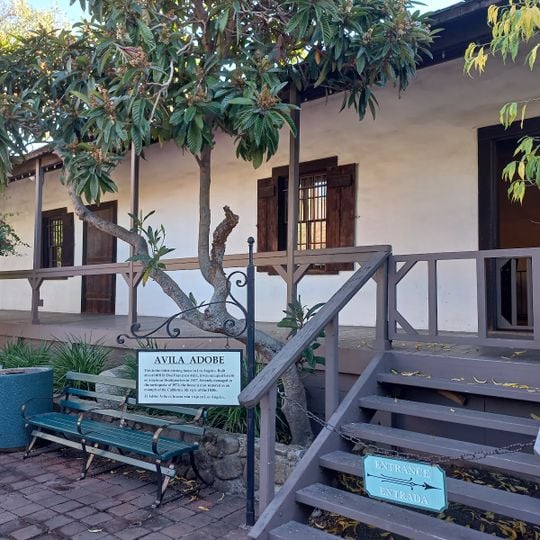
Avila Adobe is a single-story adobe residence on Olvera Street, its white walls built of sun-baked bricks 2.5 to 3 feet thick. A covered porch on three wooden posts runs across the front, with a glazed door, a central door and a shuttered window behind it; a wooden staircase with a railing rises from the lower left. The roof, originally flat, now slopes and is edged by a dark rain gutter.
Francisco Ávila, a cattle rancher from Sinaloa, built the house in 1818, and it was one of the first homes with street frontage in the Pueblo de Los Ángeles. In January 1827 the trapper Jedediah Smith stayed a few days, leading the first U.S. party to reach Alta California overland. Ávila died in 1832; his widow Encarnación remained until 1855. Christine Sterling later stopped the city from demolishing it and turned it into a museum.
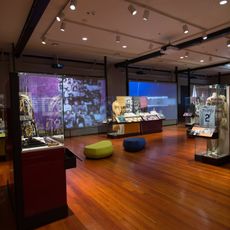
The name comes from Francisco Avila, a cattle rancher and mayor whose family lived in this house for generations. Visitors today see furniture and everyday objects from the era of Mexican rule over California, showing how wealthy families lived at that time.
The museum is open daily and admission is free, guided tours explain the building methods and family life in the 19th century. A visit takes about 30 minutes and is suitable for children, with rooms accessible from the courtyard.
The adobe's roof was originally flat, sealed with tar carried up from the La Brea Tar Pits and mixed with rocks and horsehair. In January 1827 the fur trapper Jedediah Smith stayed here for a few days, leading the first U.S. citizens to reach Alta California overland from the east.
The community of curious travelers
AroundUs brings together thousands of curated places, local tips, and hidden gems, enriched daily by 92,633 contributors worldwide.