Newland House, Historic Victorian house in Huntington Beach, United States.
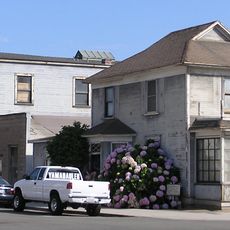
Newland House is an 1898 farmhouse in a Midwestern adaptation of Queen Anne style, built by Dawes & Kuechel of Santa Ana. Its lumber came by horse-drawn wagon from McFadden's Wharf in Newport Beach, and its cement foundation used gravel hauled from the nearby beach. It now operates as a pioneer museum managed by the Huntington Beach Historical Society.
William Taylor Newland and Mary Juanita DeLapp Newland built the house in 1898, hiring Dawes & Kuechel of Santa Ana. After Mary's death in 1952, Signal Oil & Gas used it for workers for about 20 years and dropped refinery plans after community objections. In 1974 Signal Landmark Homes donated the house and land to Huntington Beach for a historic park; it opened for tours in 1978 and was listed on the National Register in 1985.
The site occupies ground where Lupukngna, a Tongva village, once stood, and numerous Native American artifacts have been uncovered here. This location connects the European-American settlement story with the earlier indigenous presence in the region.
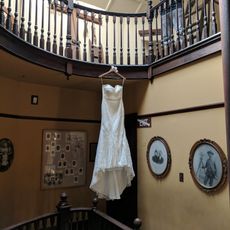
The house is open for tours through the Huntington Beach Historical Society, with guided visits showing the interior rooms and late 19th-century architecture. Visitors should plan ahead as access may be limited and tours often require advance scheduling.
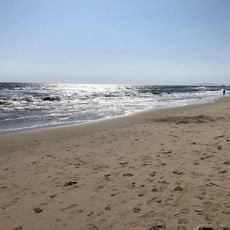
The gravel for the cement foundation was hauled from the beach at what is now Huntington Beach, and the lumber came by horse-drawn wagon from McFadden's Wharf in Newport Beach. Builders Dawes & Kuechel of Santa Ana put the house up in 1898. When the ground was dug that year, prehistoric stone mortars and pestles from the Tongva village of Lupukngna turned up; most are now at the Bowers Museum in Santa Ana.
The community of curious travelers
AroundUs brings together thousands of curated places, local tips, and hidden gems, enriched daily by 92,633 contributors worldwide.