Papago Park, Urban park and natural preserve in Phoenix and Tempe, United States.
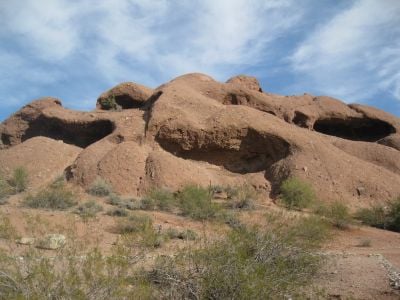
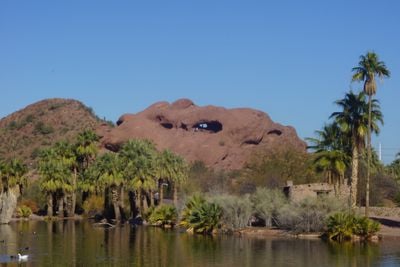
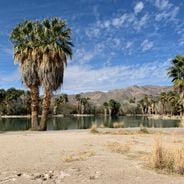
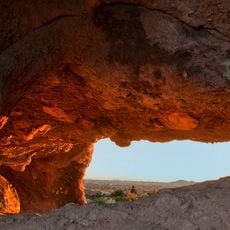
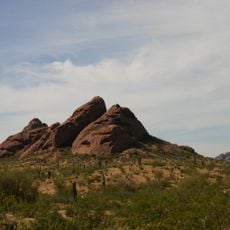
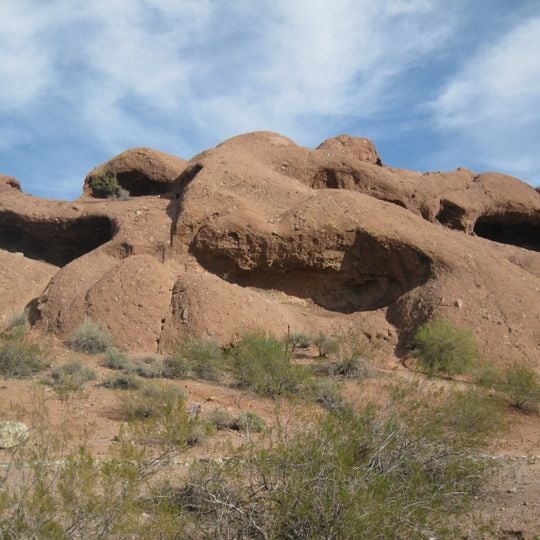
Papago Park is a hilly desert park of 1,200 acres in Phoenix and 296 acres in Tempe, Arizona. Its red sandstone formations, formed 6–15 million years ago, include rounded knobs and ledges with crevices; Hole-in-the-Rock has tafoni openings, the largest with a flat lower edge, above a pond and palm trees. The park holds Hunt's Tomb, a small white pyramid, the Desert Botanical Garden, the Phoenix Zoo and several small lakes.
The Hohokam people established settlements in this area and used the rock formations as part of their daily activities for centuries. The landscape was central to their existence in the Sonoran Desert until they moved on from the region.
Papago Park's name comes from the Papago (Tohono O'odham) people, and the land was set aside as a reservation for the Maricopa and Pima tribes in 1879. Visitors can see Hunt's Tomb, the white pyramid built in 1931 for Arizona's first governor, George W. P. Hunt, who was buried there in 1934. The park is a Phoenix Point of Pride.
The trails are accessible on foot across varying terrain, so sturdy footwear is recommended for safe walking. Bring plenty of water when visiting, especially on hot days, since shaded areas are limited throughout the park.
The Hole-in-the-Rock opening in the rock face served as a natural observation point for the area's original inhabitants. The sun's movement through this gap could be tracked at different times of the year, helping with seasonal planning.
The community of curious travelers
AroundUs brings together thousands of curated places, local tips, and hidden gems, enriched daily by 92,782 contributors worldwide.