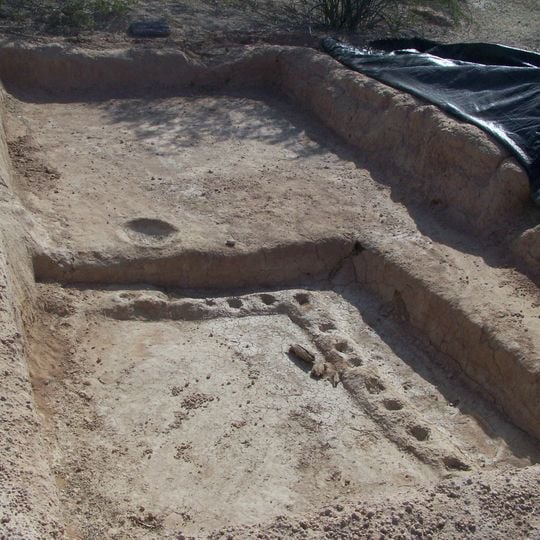
Mesa Grande, Archaeological site in Mesa, United States.
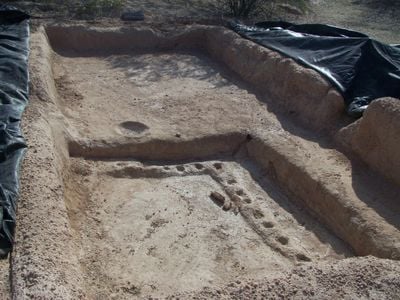
Mesa Grande is an archaeological site in Mesa with preserved earthen mounds and structural remains from the Hohokam civilization. The ruins spread across an expansive area and reveal how this culture built and organized their settlements.
The Hohokam occupied the site between AD 1100 and 1400, during the Classic Period, and built adobe-walled platforms and mounds. Around two centuries after the structures were raised, an ecological crisis and severe drought forced the Hohokam to move to the far southwestern United States. The ruins were listed on the National Register of Historic Places in 1978, when they belonged to actress Acquanetta and her husband Jack Ross; the city of Mesa acquired the site from Acquanetta in 1988.
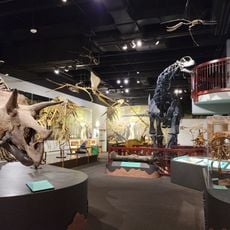
The site's Hohokam name is Sce:dagĭ Mu:val Va'aki, used today alongside the English name Mesa Grande. The central feature is a massive ruin of adobe walls and platforms, and the mound remains largely intact. The site is operated by the Arizona Museum of Natural History, which carries out archaeological studies there.
The site is seasonally open to the public from October through May, following the 2013 completion of the visitor center. The ruins lie west of and across the street from the former Mesa Lutheran Hospital, now a Banner Health corporate center. The general site remains protected but undeveloped, and the Arizona Museum of Natural History runs archaeological studies there.
This is one of only two remaining Hohokam mounds in the greater Phoenix area, preserving large adobe walls and platform structures. The rarity of such well-preserved remains from this civilization in the region makes this location especially important for understanding their achievements.
The community of curious travelers
AroundUs brings together thousands of curated places, local tips, and hidden gems, enriched daily by 92,862 contributors worldwide.