Montes Azules, biosphere reserve in Mexico
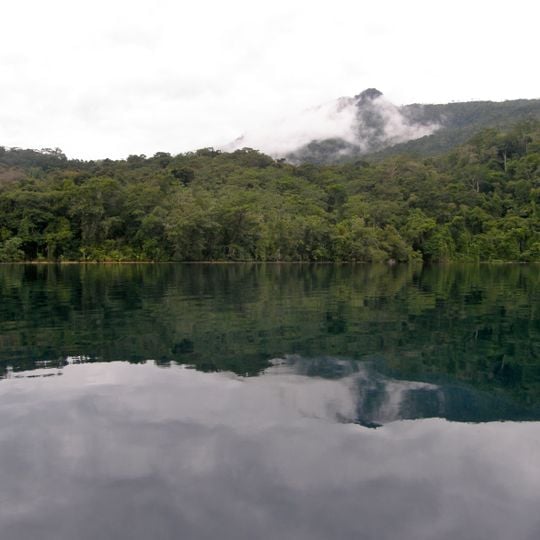
Montes Azules is a large protected area in Chiapas covering much of the Lacandon Jungle, characterized by dense forest with tall trees, diverse plant species, and flowing rivers that shape the landscape. The terrain is low-lying and remains green year-round, with humid air and patches of sunlight filtering through the thick canopy.
The reserve was created by presidential decree on 12 January 1978, after the National Council for Science and Technology set up a trust in 1976 to study the Lacandon Jungle. UNESCO added it to the World Network of Biosphere Reserves in 1979. From the mid-19th century until the 1940s, foreign sawmills along the middle Usumacinta logged mahogany and cedar, floating trunks downstream to ships.
The reserve lies in the central part of the Lacandon Jungle, where the name Montes Azules is also borne by a lagoon complex in the north, alongside Ojos Azules, Ocotal, Yanqui and El Suspiro. The forest was worked for chicle and mahogany, and logging crews floated the cut trunks down the Usumacinta to waiting ships.
Bring plenty of water, insect repellent, and sturdy footwear, as the terrain is densely forested and some areas are remote with few facilities. Exploring with a local guide is strongly recommended to safely navigate the landscape, learn about its plants and animals, and respect the rules that protect the forest.
Morelet's crocodile, listed among the reserve's native reptiles, is the animal shown resting half-submerged in dark water, its dark back scutes edged with yellowish bumps. The reserve also holds 116 mammal species, among them the white-lipped peccary and the northern tamandua, and more than 390 bird species, almost half of Mexico's known total.
The community of curious travelers
AroundUs brings together thousands of curated places, local tips, and hidden gems, enriched daily by 92,678 contributors worldwide.