Geography of Honduras, Physical terrain in Central America.
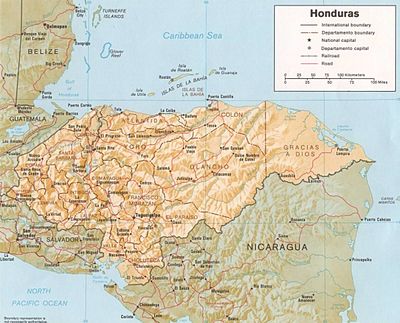
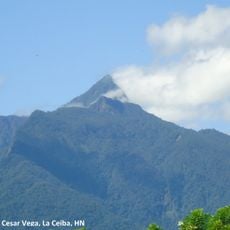
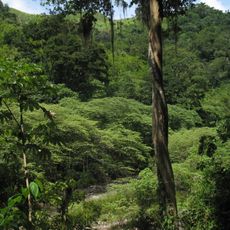
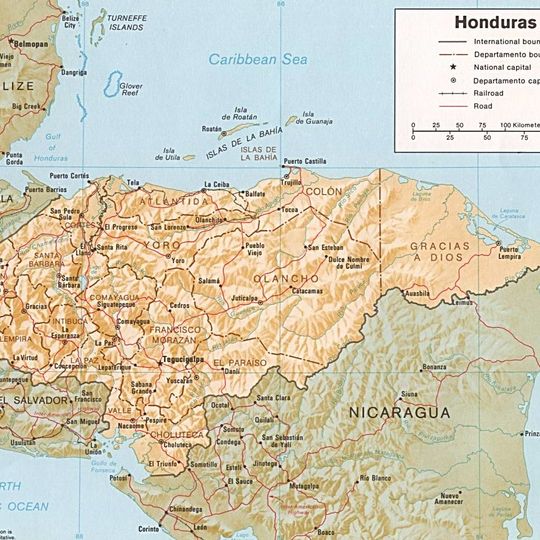
The geography of Honduras comprises rugged terrain in Central America with mountains covering most of the country and two coastlines on the Caribbean Sea and the Pacific Ocean. The relief rises from lowlands at both seas to peaks above 2800 meters inland.
After independence from Spain in 1821, the current borders with Guatemala, El Salvador and Nicaragua took shape. The natural division into coasts and highlands influenced settlement patterns before that and later shaped trade routes and transport links.
People live mainly in the central highlands, where towns sit in valleys between forested slopes and farmers work fields on terraced plots. Coastal villages and port towns follow different rhythms shaped by fishing and trade.
The country divides into three main zones: a mountainous interior with narrow valleys and steep slopes, a broad coastal lowland in the north along the Caribbean, and a shorter Pacific coast in the south. Travelers should expect different climate zones, as elevation changes greatly affect temperature and rainfall.
In the northeast, the Rio Platano Biosphere Reserve protects one of the largest remaining rainforests in Central America with lagoons, rivers and mountains over an area exceeding 5000 square kilometers. Archaeological sites within the forest recall earlier settlement in this remote region.
The community of curious travelers
AroundUs brings together thousands of curated places, local tips, and hidden gems, enriched daily by 92,188 contributors worldwide.