Puente Ortiz, National monument bridge in central Cali, Colombia.
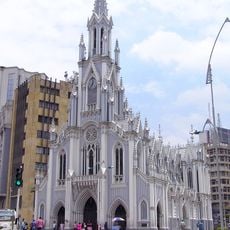
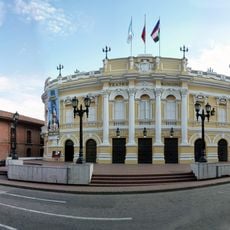
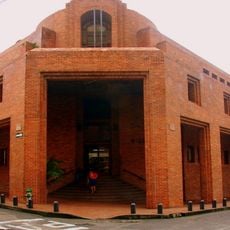
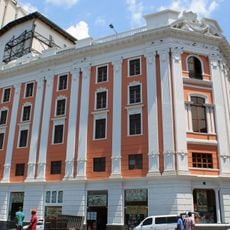
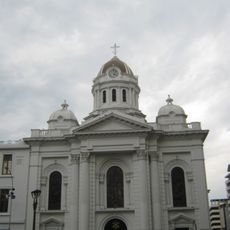
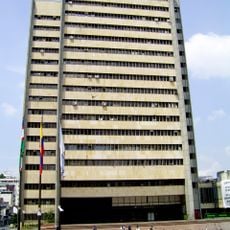
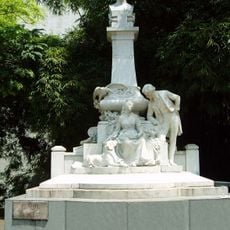
Puente Ortiz is a four-arch bridge over the Cali River in the city center, the first bridge built across that river. It was the work of the Franciscan friar José Ignacio Ortiz, an amateur engineer from Candelaria. South of it stand Los Poetas park, the Jorge Isaacs theatre and La Ermita church; north lies the Municipal Administrative Centre, seat of the mayor's office.
The first bridge over the Cali River was a bamboo footbridge built in 1734 that quickly deteriorated. In 1835 mayor Santiago Reyes proposed a replacement and named José Montehermoso director, though work began without the governor's approval. Fray José Ignacio Ortiz, a Franciscan from Candelaria, took over on 25 June 1842 and finished the bridge in October 1845. It was declared a national monument by resolution 109 of 9 November 2005.
The bridge's name honours Fray José Ignacio Ortiz, the Franciscan friar from Candelaria who finished it in 1845, while José Montehermoso, director from 1835, is largely forgotten. Since 1986 it has been pedestrian again, after citizens petitioned to reopen it to traffic in the 1980s.
The bridge links the city centre with the north bank of the Cali River; to the south are Los Poetas park, the Jorge Isaacs theatre and La Ermita church, to the north the municipal administrative centre. Closed to cars since 1986, it is pedestrian-only, so cross on foot. In 2011 work to sink Avenida Colombia into a tunnel uncovered parts of the 1840 structure.
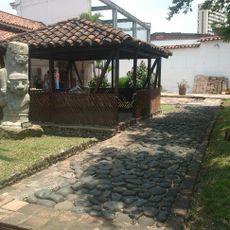
The 2011 works to sink Avenida Colombia uncovered parts of the bridge structure dating from 1840, including the walls of one approach; the west wall imitates Roman opus caementicium. Animal remains, dishes, ceramics, iron objects and human remains were also found, delaying the works.
The community of curious travelers
AroundUs brings together thousands of curated places, local tips, and hidden gems, enriched daily by 92,731 contributors worldwide.