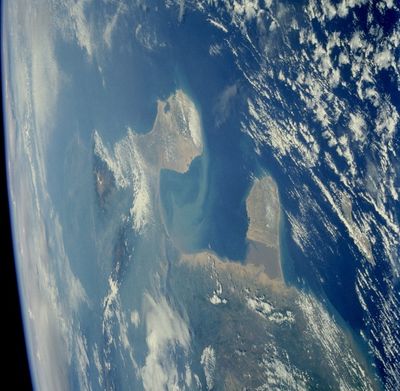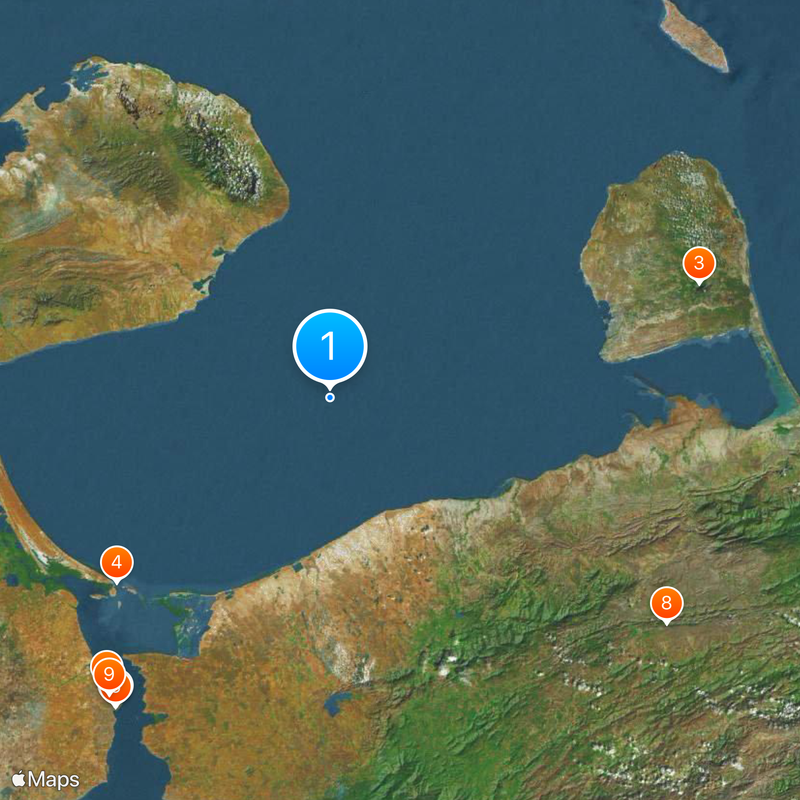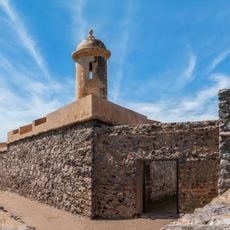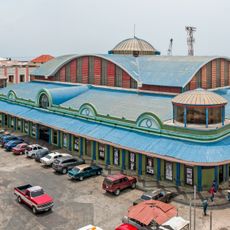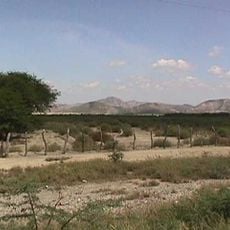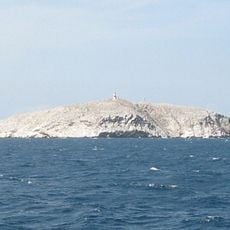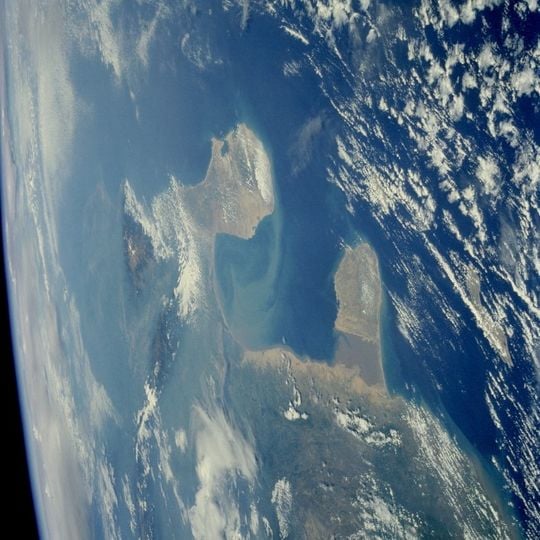
Gulf of Venezuela, Caribbean inlet between Guajira Peninsula and Paraguaná Peninsula, Venezuela and Colombia.
The Gulf of Venezuela sits between the Guajira Peninsula in Colombia and the Paraguaná Peninsula in Venezuela, covering roughly 6,500 square miles (17,000 square kilometers). This inlet connects the open Caribbean Sea to Lake Maracaibo through Tablazo Bay, forming a natural passage between two countries.
European sailors first reached these waters in 1499 when Alonso de Ojeda and Amerigo Vespucci explored the coast after sailing through the Netherlands Antilles. Their voyage marked the beginning of European mapping of this region and led to the establishment of several port towns along both shores later on.
The maritime boundary delimitation in the Gulf remains a subject of diplomatic negotiations between Venezuela and Colombia, affecting regional relations and territorial claims.
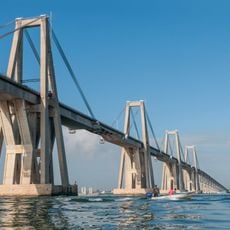
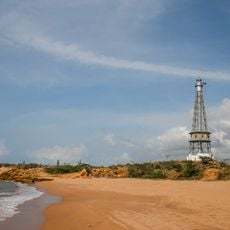
This body of water serves as a major shipping lane, especially for oil transport moving through a man-made canal from Lake Maracaibo to the open sea. Visitors can explore coastal sections on both sides, though the shores often experience windy conditions and strong currents.
Several rivers including Motatán, Escalante, Chama and Catatumbo flow indirectly into the waters here through Lake Maracaibo, bringing fresh water from the Andes. This meeting of river and sea water creates shifting salinity levels and influences the life of many fish species in the region.
The community of curious travelers
AroundUs brings together thousands of curated places, local tips, and hidden gems, enriched daily by 91,983 contributors worldwide.