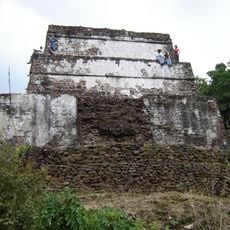
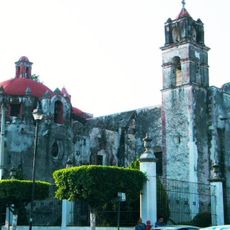
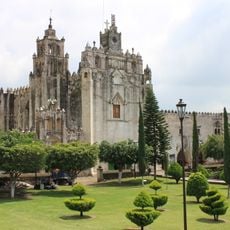
Former convent of Saint William, Religious convent in Totolapan, Mexico.
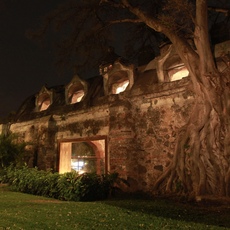
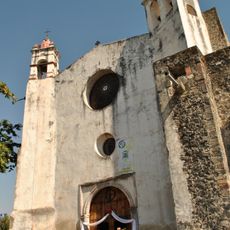
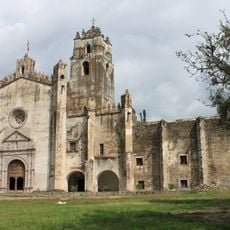
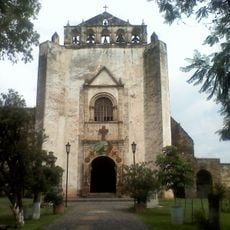
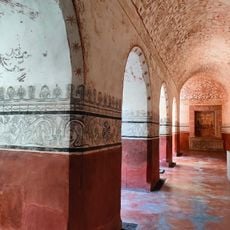
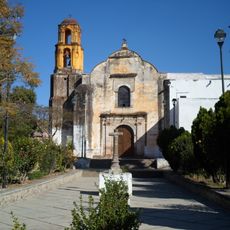
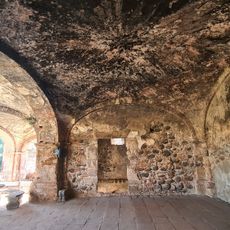
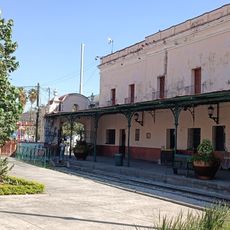
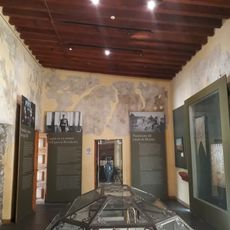
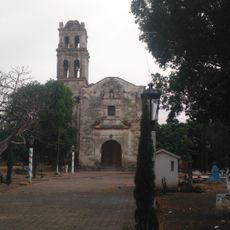
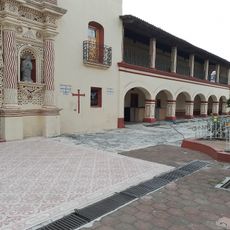
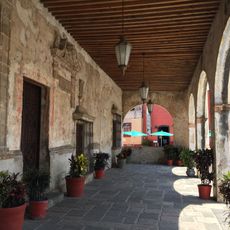
The former convent of Saint William comprises a single-nave church with a barrel-vaulted roof, a convent, an atrium, an orchard and two posa chapels. Its church facade is covered with the monograms "IHS" and "XPS", Greek abbreviations for Jesus and Christ. Inside, Renaissance, medieval and Moorish-style murals depict members of the Augustinian Order. The atrium and orchard have remained free of later construction.
The Augustinian Order founded the convent in 1534, with construction supervised by friar Jorge de Ávila. In 1537 it took in the occupants of the Ocuituco convent, abandoned after a dispute with Juan de Zumárraga, Bishop of Mexico; the Augustinians returned to Ocuituco in 1546. In 1543 an indigenous man gave prior Antonio de Roa a cloth holding a crucifix, the Cristo de Totolapan, kept here until its 1582 transfer to Mexico City.
The three posa chapels on the grounds were specifically built so indigenous people could participate in religious services while remaining outside the main building. Visitors can see how these separate spaces reflect the blending of European and local traditions.
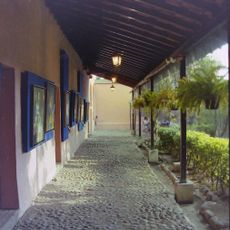
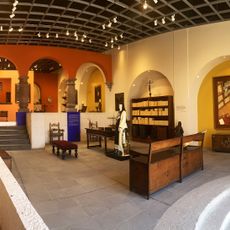
The compact single-story building can be explored easily on foot, with preserved interior spaces and paintings clearly visible throughout. Visitors should allow time to walk through the various chapels slowly and observe the details of the artworks.
The Cristo de Totolapan, a crucifix now venerated in the church, was brought to the convent in 1543 by an indigenous man who handed it to prior Antonio de Roa and then vanished. In 1582 the image was moved to Mexico City during a plague epidemic and later hidden when the Reform Laws closed convents in 1861.
The community of curious travelers
AroundUs brings together thousands of curated places, local tips, and hidden gems, enriched daily by 94,846 contributors worldwide.