Former convent of Saint John the Baptist, 16th-century convent in Yecapixtla, Mexico
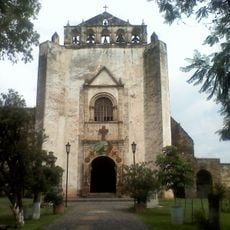
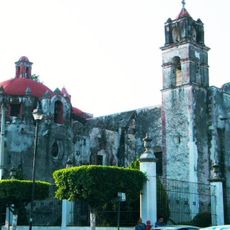
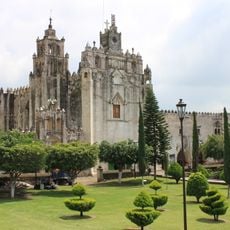
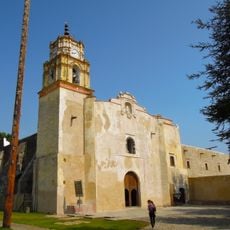
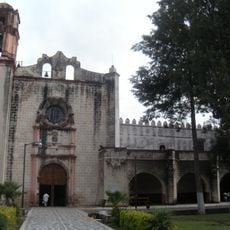
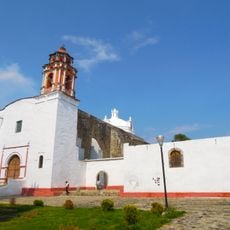
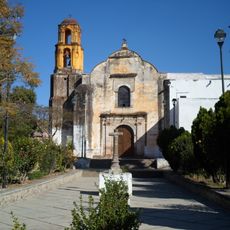
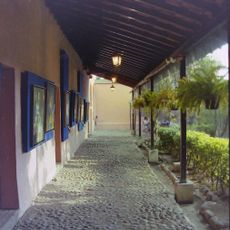
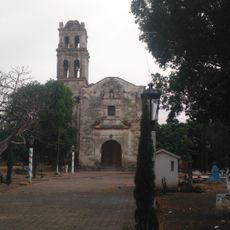
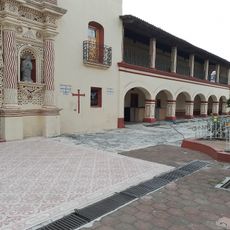
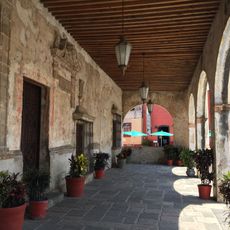
The former convent is a 16th-century religious complex with thick protective walls, a large courtyard, corner chapels, and detailed stone work that combines European and Indigenous building elements. The layout shows how spaces for prayer, teaching, and administration were arranged together.
Augustinian missionaries built this religious complex during Spanish colonization to spread Christianity and secure control in central Mexico. The convent later became important as settlement in this region developed.
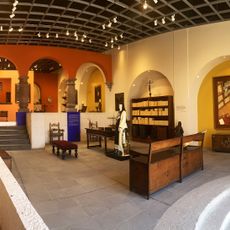
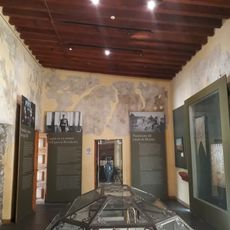
The main church door carries the coats of arms of the Augustinian and Franciscan orders, and the side door is decorated in Plateresque style. In the convent courtyard stands a sundial divided into two sections, one marking the hours before noon and the other the hours after. The antechamber of the refectory is decorated with images of saints, including Saint Augustine.
The complex comprises the church, convent, atrium and four corner chapels. The 2017 earthquake damaged the frontispiece rose window, and restoration was still being pursued with UNESCO support as of December 2021, so some areas may be closed off. The convent patio holds a sundial split into morning and afternoon halves.
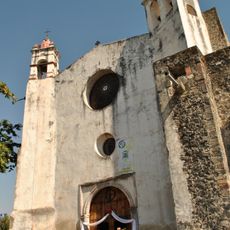
The convent's facade holds a three-metre rose window, and the main church door carries the coats of arms of the Augustinian and Franciscan orders, while the side door is carved in Plateresque style. In the convent courtyard stands a sundial split into two sections, one marking the hours before noon and the other the hours after.
The community of curious travelers
AroundUs brings together thousands of curated places, local tips, and hidden gems, enriched daily by 95,288 contributors worldwide.