Chalcatzingo, Archaeological site in Morelos, Mexico.
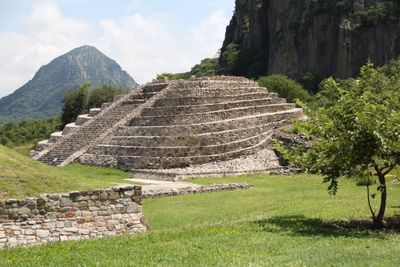
Chalcatzingo is an archaeological site in Morelos built on a fertile hillside with terraced structures, stone platforms, and carved monuments scattered across the landscape. The reliefs feature human figures, animals, and symbols positioned at different elevations throughout the site.
The settlement developed as a ceremonial center around 800 to 500 BCE, representing an early phase of Mesoamerican civilization in central Mexico. During this time it became an important hub for regional trade networks and ritual practices.
The name Chalcatzingo comes from Nahuatl and means 'place of the precious green stone' or 'place of the Chalcas'. The site's bas-reliefs, such as Monument 1 (El Rey), show a ruler seated in a cave with raindrops falling above, interpreted as a leader bringing water. The five smaller reliefs of the Water Dancing Group, east of El Rey, can only be seen in sequence, suggesting a processional route.
The site lies in the Amatzinac River Valley at the foot of two granodiorite hills; the reliefs of the Water Dancing Group sit high on the hillside of Cerro Chalcatzingo, above the natural water channel, while the second group is carved on loose slabs and boulders at the mountain's base. Reaching the upper carvings means walking uphill on uneven ground with little shade, so sturdy shoes and water help. The site is in the municipality of Jantetelco, in eastern Morelos.
El Rey was exposed in 1934 when a cloudburst stripped the soil from the rock face, which is how the site became known. The relief sits above a natural channel that once carried water to the settlement, and five smaller carvings of saurian creatures on scrolls stretch east from it, separated by that channel; some researchers read them as a processional sequence.
The community of curious travelers
AroundUs brings together thousands of curated places, local tips, and hidden gems, enriched daily by 94,434 contributors worldwide.