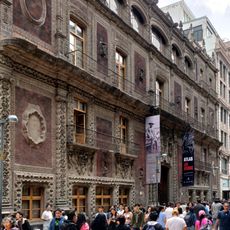
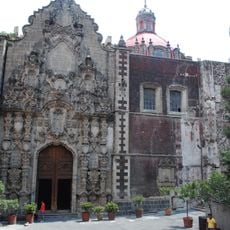
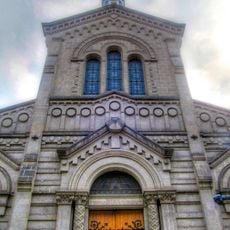
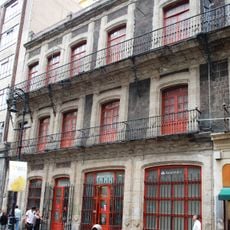
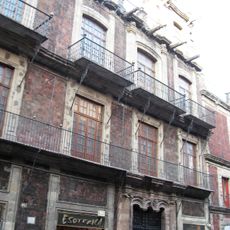
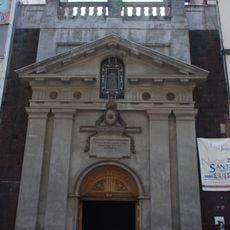
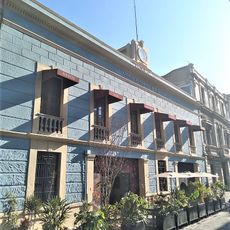
Regina Coeli Church, Mexico City, Churrigueresque church in Centro Histórico, Mexico City, Mexico
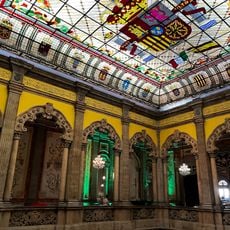
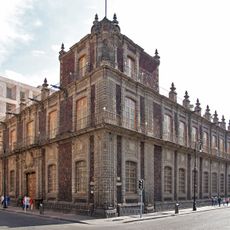
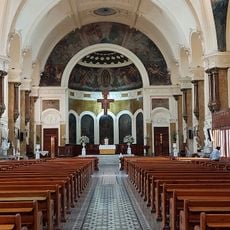
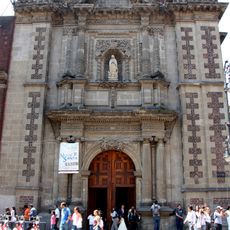
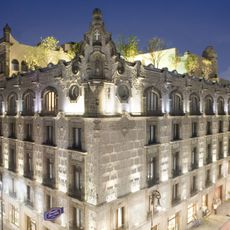
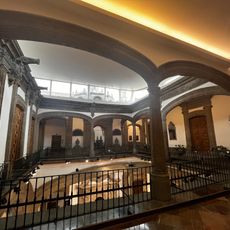
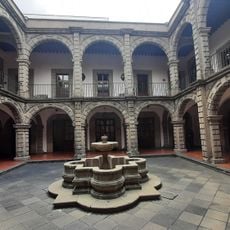
Regina Coeli Church is a Churrigueresque building in Mexico City's historic center, distinguished by ornamental stone carvings and richly decorated interior spaces. The main altar and side altarpieces display intricate carved details that cover much of the visible wall and ceiling surfaces.
The land was granted to the Conceptionist order in 1573, and Pope Gregory XIII authorized the convent in 1578, making it the second house of that order in New Spain. The church dates from 1655, was repaired several times and reconsecrated in 1731. The Reform Laws closed the convent in 1863, turning the church into a parish; the complex was declared a National Monument in 1982.
The name Regina Coeli comes from the Latin prayer to the Virgin Mary said during Easter. The convent's nuns founded other Conceptionist houses in Oaxaca, San Miguel Allende and elsewhere in Mexico City. A theatre company, Fénix Novohispano, staged "Historias de vivos, muertos y aparecidos", four plays drawn from local legends, among them a nun who healed the sick with her bread and Don Felizardo Peñalva, hanged in the church after stealing a gold head of Christ.
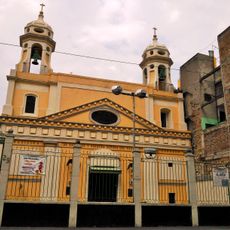
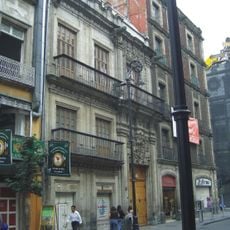
The church occupies the corner of Regina and Bolivar Streets in the downtown historic district, making it easy to locate on foot. Since this is an active place of worship, visitors should be respectful of Mass schedules and other religious activities taking place throughout the day.
The 1773 tile set at the foot of the bell tower marks the 200th anniversary of the convent's founding. Inside, the cupola is painted with images of the Church founders Augustine, Jerome, Gregory and Ambrose. The nave runs east-west under a barrel vault, and the main altar's flared form makes it a niche containing other niches.
The community of curious travelers
AroundUs brings together thousands of curated places, local tips, and hidden gems, enriched daily by 93,779 contributors worldwide.