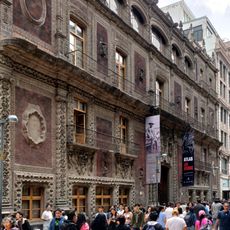
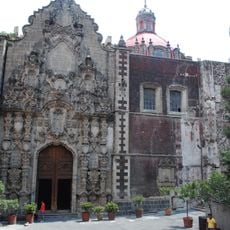
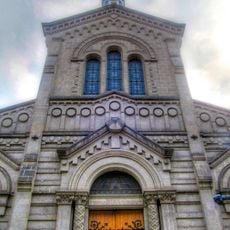
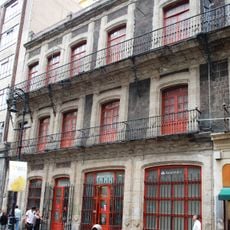
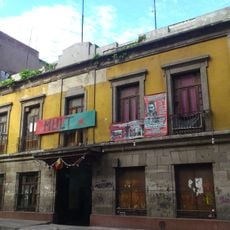
Porta Cæli Cathedral, Mexico City, Neoclassical cathedral in Centro Histórico, Mexico City
Porta Cæli Cathedral is a Neoclassical church completed in 1711, originally the church of the Dominican College of Porta Coeli, which occupied the whole block between today's Carranza, Pino Suárez and Uruguay streets and the Callejón de Tabaqueros. The college is gone; the church remains, its interior renovated with eight Byzantine murals painted between 1970 and 1979.
The building was originally founded as a Dominican church in 1603, with construction continuing until 1711. It later became the principal church of the Greek Melkite Catholic community in the city.
The name Porta Coeli means "Gate of Heaven" in Latin, inherited from the Dominican college founded on this site. The church keeps an exact replica of the Cristo Negro known as El Señor del Veneno, a miraculous image moved to the Metropolitan Cathedral in 1935. It is the only church of the Melkite Greek Catholic Eparchy of Our Lady of Paradise, created in 1952.
The cathedral stands at the corner of Carranza and Pino Suárez in the Centro Histórico, a short walk from the Zócalo and the Pino Suárez metro station. It is an active Melkite Greek Catholic parish, so visits are best timed outside the Divine Liturgy; the eight interior murals are the main thing to see inside.
The interior features eight Byzantine murals painted during the 1970s depicting biblical scenes such as the Annunciation and the Nativity. These artworks bring an Eastern visual quality to the space that contrasts with the Neoclassical exterior.
The community of curious travelers
AroundUs brings together thousands of curated places, local tips, and hidden gems, enriched daily by 94,764 contributors worldwide.