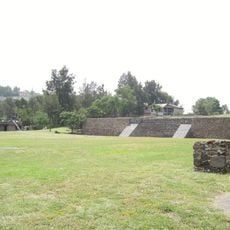
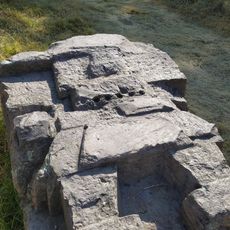
Tepexpan man, Ancient hominin fossil site in Tepexpan, Mexico.
Tepexpan Man is a prehistoric skeletal discovery from near the former Lake Texcoco in Mexico. The remains lie in a distinctive position with arms under the chest and legs drawn to the stomach, surrounded by mammoth remnants from the Late Pleistocene.
Archaeologist Helmut de Terra uncovered this prehistoric human skeleton in February 1947 on the former shores of Lake Texcoco in central Mexico. The discovery is considered among the oldest known human remains on the American continent, dating to a time when ice age animals still roamed.
The discovery shows how humans and large animals coexisted during the ice age and possibly interacted with one another. The remains tell us about early settlement in this region, long before other known cultures developed.
The site lies in a region that is now completely dry, so visitors cannot experience the original environment as it once was. It helps to learn about the geological history of Lake Texcoco beforehand to better understand the significance of the location.
Recent DNA analysis suggests the skeleton might belong to a female, not a male as originally thought, and that she may have been trampled by a mastodon around 11,000 years ago. This reassessment shows how modern DNA technology can fundamentally change our understanding of ancient discoveries.
The community of curious travelers
AroundUs brings together thousands of curated places, local tips, and hidden gems, enriched daily by 91,548 contributors worldwide.