Chimalhuacán, Archaeological site in Chimalhuacán, Mexico.
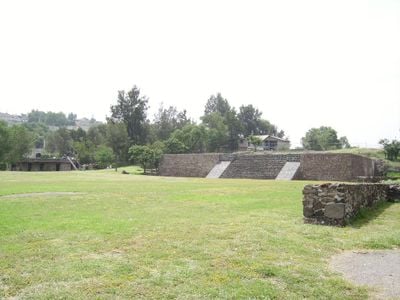
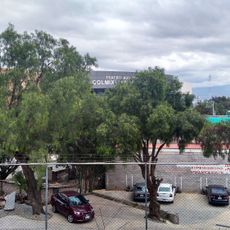
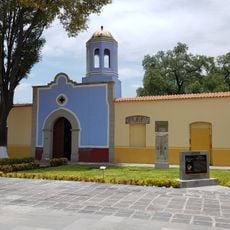
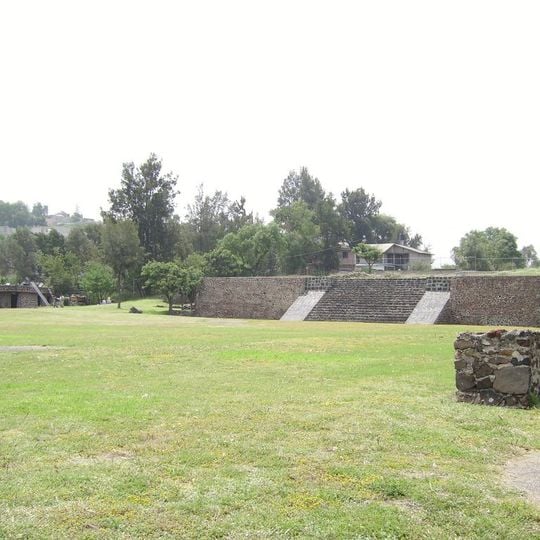
Chimalhuacán, also called Los Pochotes, covers one hectare and preserves a tecpan (government palace) of a Chichimeca altépetl dated to 1250 AD, plus an Aztec III residential area, a ball court, a four-platform structure and a stone serpent. A long stone wall with a central panel of small dark stones and two sloped ramps faces a lawn; a small block of rough stones sits at the lower right.
Chimalhuacán was an altépetl of Acolhua founders who spoke Chichimeca and Nahuatl, later a tributary state of Texcoco and part of the Triple Alliance. Its tecpan, a palace of a Chichimeca altépetl, dates to around 1250 AD. Nezahualcóyotl stopped here on his way to be crowned in Texcoco and decreed an amnesty for towns that had fought for the Tepanecs.
The name comes from Nahuatl chimalli, "shield", with the possessive hua and can, "place": "place of those who possess shields". The glyph in the Códice Quinatzin shows a shield on a hill, likely the Chimalhuache hill near the town core. The site is also called Los Pochotes.
The site is open Tuesday through Sunday from 10 to 17, with access via Pochotes Street in the San Andrés neighborhood. Visitors should wear comfortable shoes, as exploring the scattered structures requires walking across the grounds.
The pre-ceramic skeleton found here in 1984 is described by researcher Maximino Quintero as the most complete of the 38 recovered up to that year, and possibly the oldest in Mexico. The site museum, opened in 2000, displays Pleistocene fauna from the former shores of Lake Texcoco.
The community of curious travelers
AroundUs brings together thousands of curated places, local tips, and hidden gems, enriched daily by 94,533 contributors worldwide.