Museo Casa de la Bola, Colonial mansion museum in Tacubaya, Mexico.
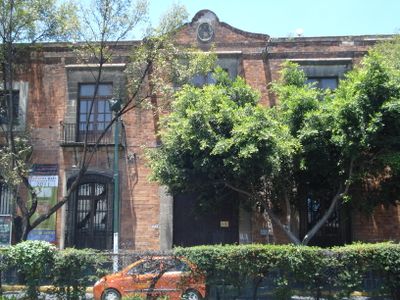
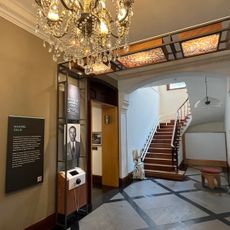
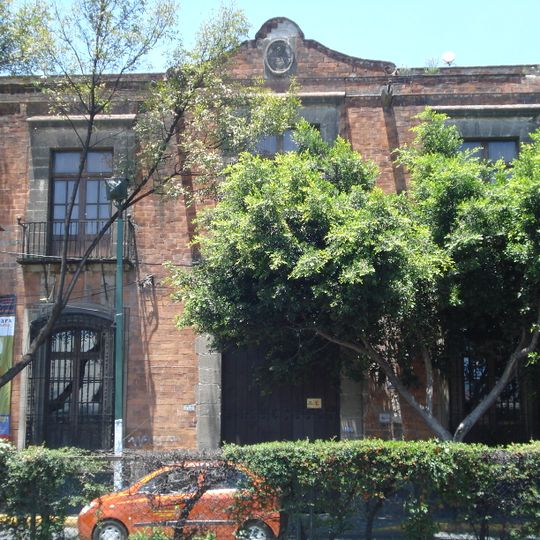
Museo Casa de la Bola occupies an 18th-century brick mansion in Tacubaya whose facade was remodeled in a neo-colonial style by architect Manuel Cortina in the early 20th century. The reddish-brown brick front has pale stone quoins at the corners, a curved stepped parapet with a small round window at the top center, and a tall arched doorway framed in carved pale stone holding a dark iron-and-glass door, with an iron balcony above it. Inside are 11 salons and two libraries displaying furniture, paintings, sculptures and decorative objects from the 16th to the 20th centuries.
The house stands on land that had olive groves and maguey for oil and pulque in the 16th century; the first ownership documents date from 1600, and a medallion of Juan Suárez de Peralta, an early owner, is carved high on the facade. It passed through 19 owners, among them Francisco Bazán Albornoz, inquisitor of the Holy Office, and the Conde de la Cortina. In the early 20th century the architect Manuel Cortina remodeled the facade in a neo-colonial style. Antonio Haghenbeck y de la Lama bought it from his cousin Joaquín Cortina Rincón Gallardo in 1942, renovated it in the 1940s and founded the Fundación Cultural Antonio Haghenbeck y de la Lama in 1991, the year he died; the museum opened on 27 May 1991.
The name's origin is uncertain: one story cites a vanished sphere ornament on the facade or patio, another that a 19th-century revolt, called la bola, took place here. Oral tradition holds that La Güera Rodríguez, the Marquesa Calderón de la Barca and José Zorrilla, author of Don Juan Tenorio, stayed in the house. The patio and gardens with fountains and ponds are rented for social events.
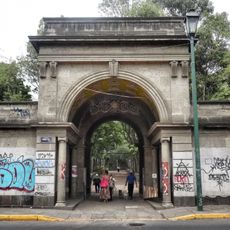
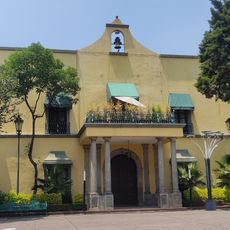
The museum is in the Casa de la Bola in Parque Lira, Tacubaya. The patio and gardens, fitted with a wooden floor and a metal-and-synthetic cover in the 1990s, are rented for social events, so check whether a private function limits access before setting out. The foundation that runs the house is registered with Mexico City's Junta de Asistencia Privada.
The name's origin is uncertain: one theory cites a lost sphere ornament on the facade or patio, another a 19th-century revolt that locals called "la bola." A medallion high on the facade shows Juan Suárez de Peralta, owner of the land before the house.
The community of curious travelers
AroundUs brings together thousands of curated places, local tips, and hidden gems, enriched daily by 94,471 contributors worldwide.