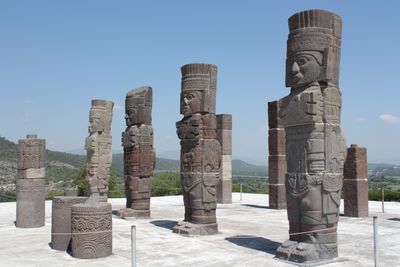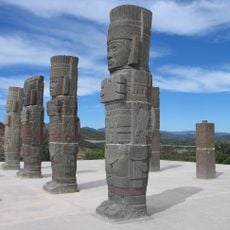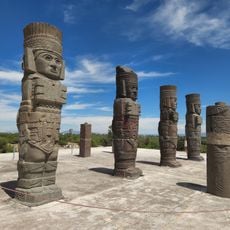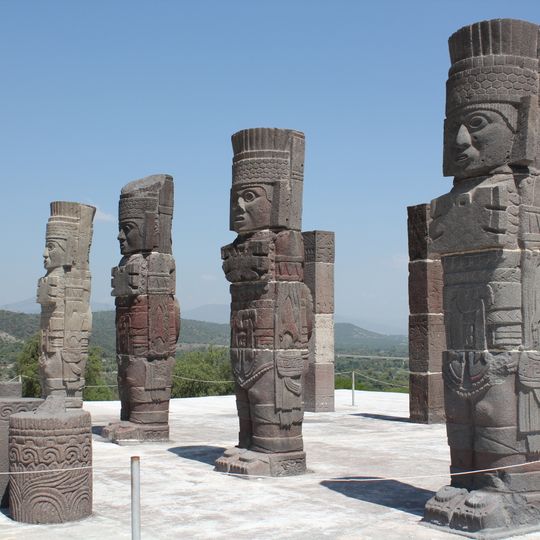
Atlantean figures at Tula, Monumental warrior sculptures in Tula, Mexico.
The Atlantean figures are four warriors carved from dark basalt, standing on top of a pyramid and rising about 5 meters (15 feet) high. The sculptures show men in full ceremonial dress, with detailed headdresses and weapons in both hands.
The sculptures were made between the 10th and 12th centuries, when Tula was the capital of the Toltec people. Later they influenced Aztec art, which adopted similar warrior representations.
The warriors all wear a butterfly on the chest, a symbol linked to the Toltec god of war. Each figure holds weapons that show the role fighters played in the old society.
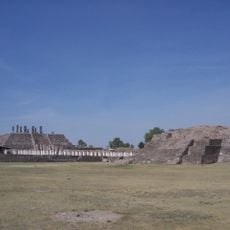
The warriors stand on top of Pyramid B, which you can reach by climbing wide steps. From there you can see the old plaza and the surrounding buildings of the site.
The figures once held up the roof of the temple that stood on the pyramid. Their name Atlanteans refers to this supporting role, not to the sunken land.
Location: Tulasas
Made from material: basalt
GPS coordinates: 20.06425,-99.34036
Latest update: December 4, 2025 23:40
Hidalgo state sits northeast of Mexico City, connecting volcanic landscapes with more than two thousand years of human settlement. The region extends from high-altitude pine forests to semi-arid canyons, with geological processes having created basalt columns, cave systems with thermal springs, and marble formations. Colonial monasteries from the 16th century stand alongside mining towns that emerged during the Spanish era, while the archaeological site of Tula served as the capital of the Toltec civilization that preceded the Aztec empire. Visitors can walk among the hexagonal basalt columns at Prismas Basálticos, bathe in the warm pools of Grutas de Tolantongo, or view the stone warrior statues at Atlantes de Tula. Mining towns such as Real del Monte preserve their narrow streets and historic mines, while the Aqueduct of Padre Tembleque, a 16th-century UNESCO World Heritage structure, carried water across distances through a series of tall arches. National parks like El Chico protect mountain forests, the Metztitlán Canyon Reserve hosts desert ecosystems, and Atezca Lake offers views of calm water surrounded by forested hills. The combination of natural variety and centuries of history makes Hidalgo a place where each visit reveals both geology and human adaptation to this demanding environment.
Tulasas
119 m
Museo Nacional del Virreinato
41 km
Church of San Francisco Javier, Tepotzotlán
41 km
Tepotzotlán Aqueduct
33.1 km
Zona Arqueológica de Tula
841 m
Infonavit Norte
45.2 km
St. Joseph Cathedral, Tula de Allende
1.1 km
Balneario Vito
16 km
St. Bonaventure Cathedral, Cuautitlán
47.2 km
Tula National Park
368 m
Santiago Apóstol parish in Tequixquiac
26.5 km
Templo y exconvento de San Francisco
13.5 km
Jorge R. Acosta Museum
667 m
San Bartolomé Parish
47.3 km
Ciudad Cooperativa Cruz Azul
8.3 km
San Miguel Arcangel Parish
47.3 km
Archaeological Museum Apaxco
19.9 km
Santiago Apóstol Parish
47.3 km
Antigua Estación De Ferrocarril De Tula
1.3 km
La Casa Del Recuerdo De Ofe.
39.4 km
Parroquia de San Nicolas Tolentino
34.3 km
Letras Pueblo Mágico Tepotzotlan
41 km
Velatorios Municipales Nicolas Romero
47.3 km
Petrograbados
957 m
Museo Arqueológico de Coyotepec Ehecalli
35.2 km
Toscana Alta La Palma
22.8 km
Museo del Ferrocarrilero
29.3 km
Текіскьяк
20.3 kmReviews
Visited this place? Tap the stars to rate it and share your experience / photos with the community! Try now! You can cancel it anytime.
Discover hidden gems everywhere you go!
From secret cafés to breathtaking viewpoints, skip the crowded tourist spots and find places that match your style. Our app makes it easy with voice search, smart filtering, route optimization, and insider tips from travelers worldwide. Download now for the complete mobile experience.
A unique approach to discovering new places❞
— Le Figaro
All the places worth exploring❞
— France Info
A tailor-made excursion in just a few clicks❞
— 20 Minutes