Cerro de las Campanas, National park in Santiago de Querétaro, Mexico
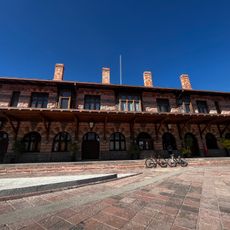
Cerro de las Campanas is a national park in northern Santiago de Querétaro, with a hill of volcanic rock and a memorial chapel at the summit. The park spreads across open ground with walking paths, shaded trees, and several permanent exhibition rooms at the base of the climb.
In June 1867, Emperor Maximilian I was executed here alongside two Mexican generals, sealing the end of French intervention. The republic returned under Benito Juárez, and the hill was later declared a national park.
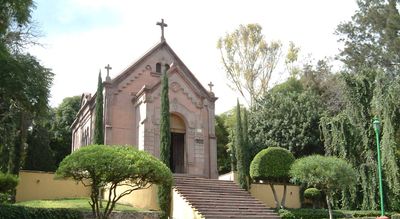
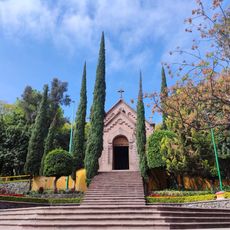
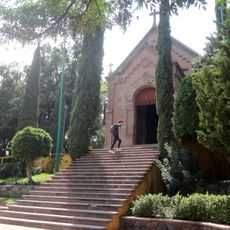
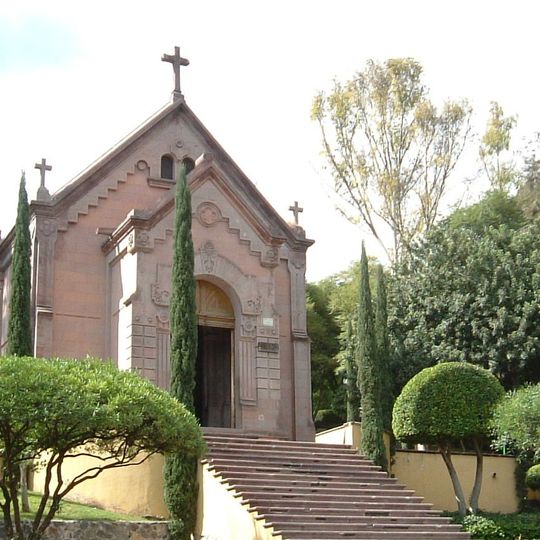
The neo-Gothic chapel was commissioned by Emperor Franz Joseph I of Austria in memory of his executed brother Maximilian; work began in 1900 to designs by the Viennese architect Maximiliano von Mitzel, and the Bishop of Querétaro, Rafael Sabás Camacho y Guzmán, blessed it on 10 April 1901. It stays closed to visitors and can only be seen from outside, framed by stepped zigzag moldings and topped by three crosses.
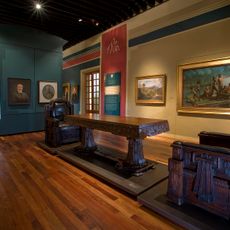
The chapel on the summit stays closed to visitors and can only be viewed from outside. The park is ringed by the central campus of the Universidad Autónoma de Querétaro, and the summit esplanade is reached by a stairway on its south side. A museum with five permanent rooms, run by the municipal government, stands on the hill.
The hill's name comes from its phonolite rocks, which ring like bells when struck; phonolite means "sounding stones." Visitors have carried off so many fragments that only two pieces remain on display. The chapel on the slope, begun in 1900, was commissioned by Emperor Franz Joseph I of Austria in memory of his executed brother Maximilian.
The community of curious travelers
AroundUs brings together thousands of curated places, local tips, and hidden gems, enriched daily by 93,785 contributors worldwide.