Caddo Mounds State Historic Site, Archaeological ceremonial center in Alto, Texas.
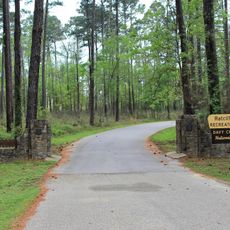
Caddo Mounds is an archaeological site in Weeping Mary, Texas, with three earthen mounds: Mound A, the largest, at the southern edge; Mound B, a platform mound begun around 1100 CE; and Mound C, a burial mound. A flat grassy field crossed by a straight gravel path, with a bench and trash receptacle, leads toward a line of trees.
The Hasinai Caddo founded a permanent village here around 850–900 CE, and Mound A was begun at that time. Major construction continued until about 1250 CE, when the Caddo ritually capped the mounds and abandoned the site. In 1779 Athanase de Mézières gave the first written mention of the mounds.
The site reflects Caddo Nation traditions through exhibits and ongoing collaboration with present-day Caddo people from Oklahoma. Visitors can see how this community maintains its connection to this place through educational programs and shared narratives.
The site lies 6 miles west of Alto on State Highway 21 near its junction with U.S. Route 69. A 0.7-mile self-guided interpretive trail leads to the burial, temple and ceremonial mounds, and a separate trail follows the El Camino Real. The museum, reopened in October 2015, has hands-on exhibits and a replica Caddo village.
The earliest written record of the mounds comes from Athanase de Mézières, who passed through in 1779 while travelling from Louisiana to San Antonio for the Spanish government. The site sits on a precontact Native American trail that the Spanish later named El Camino Real de los Tejas, and a separate trail along that route can still be walked.
The community of curious travelers
AroundUs brings together thousands of curated places, local tips, and hidden gems, enriched daily by 92,954 contributors worldwide.