LaBranche Plantation Dependency, human settlement in United States of America
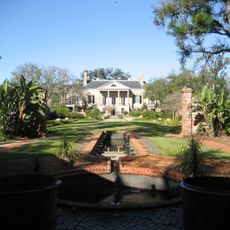
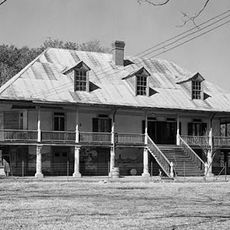
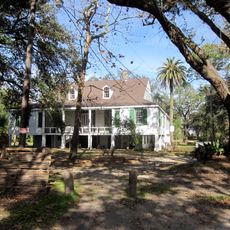
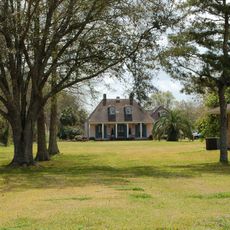
LaBranche Plantation Dependency is a small Creole-style garçonnière built in the early 19th century in St. Rose, St. Charles Parish, Louisiana. Its beaded beams and ceiling boards, high-quality mantels with sunburst motifs, and engaged balusters are unusually elaborate for a building of its size. It is the only structure remaining from the LaBranche plantation, whose main house was destroyed during the Civil War.
German immigrants of the Zweig family acquired the property and built the plantation big house and related buildings in 1792. The main house was destroyed during the Civil War, leaving only the garçonnière dependency and an oak-lined allée. Olidé and Marie Perilloux Cambre bought the dependency and property in 1902; the Lentini family purchased and restored it in 1983, and it was listed on the National Register of Historic Places on October 18, 1984.
The building displays Federal-style woodwork of a type rarely found intact in this region today. Its function as a garçonnière, or bachelor quarters for unmarried men, shows how plantation households organized their living spaces.
The dependency house and the preserved slave quarters stand on land owned by the Lentini family of Kenner, who restored the dependency in 1983. The site of the destroyed manor house is separate private land and is not open to the public. The structures are seen from outside; arrange any visit in advance with the owners.
The grounds hold a bathtub that belonged to Zachary Taylor, 12th U.S. president, alongside a restored slave quarters building. Such quarters are scarce locally because most plantation land was bought by oil refineries and industrial plants, and surviving slave housing was usually torn down. The Lentini family of Kenner bought and restored the dependency house in 1983.
The community of curious travelers
AroundUs brings together thousands of curated places, local tips, and hidden gems, enriched daily by 94,550 contributors worldwide.