Mississippi Petrified Forest, Petrified forest and National Natural Landmark near Flora, Mississippi, United States
Mississippi Petrified Forest is a National Natural Landmark in Flora displaying a collection of fossilized tree specimens. The site showcases fir and maple logs that have been transformed into stone through natural mineralization processes over millions of years.
Local settlers knew the petrified logs by the mid-19th century; University of Mississippi professor Calvin S. Brown published the first description in Popular Science Monthly in November 1913. In 1962 R.J. "Bob" and Shirl Schabilion bought forty acres of farmland containing most of the exposed logs and turned the site into a park. It was designated a National Natural Landmark in October 1965.
Petrified wood became Mississippi's state stone in 1976 through a State Senate resolution that cited this forest. The museum holds petrified wood from every U.S. state and other countries, including leaves, fruits, cones and bark, plus dinosaur footprints, whale bones and turtle shells; the mastodon bones were found 9 mi (14 km) away.
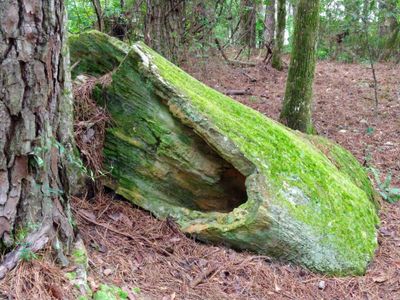
The park is reached from Flora, Mississippi, and the main activity is a 0.5 mi (0.80 km) nature trail past exposed petrified logs, including a cross-sectioned Sequoia trunk and the "Caveman's Bench", a large piece of petrified wood visitors can sit on. The museum holds petrified wood from every state and other countries, plus dinosaur footprints, whale bones, turtle shells and mastodon bones found 9 mi (14 km) away.
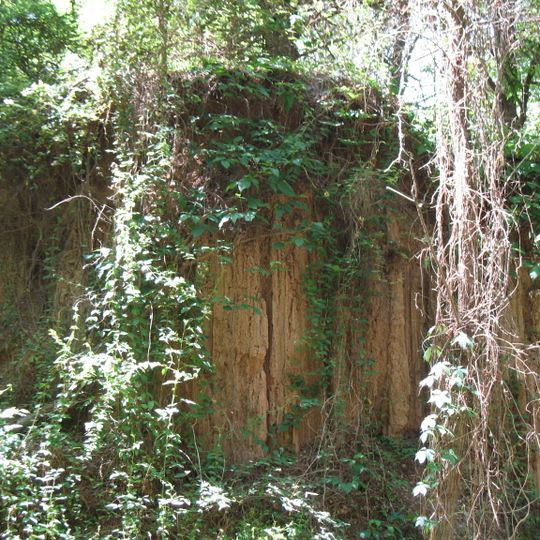
The fossil wood lies in the Forest Hill Formation, where weathering sulfide minerals linked to lignite created a hyper-acidic setting; silica from the surrounding sand replaced cell walls with chalcedony and quartz. Erosion of overlying loess then exposed the logs in gully walls and cliffs.
The community of curious travelers
AroundUs brings together thousands of curated places, local tips, and hidden gems, enriched daily by 94,497 contributors worldwide.