Ross Knox House, historic house in Alabama, United States
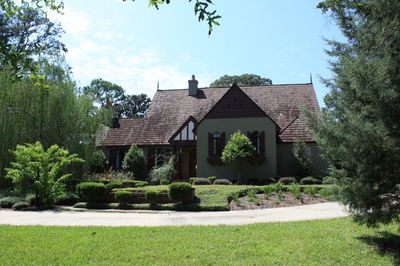
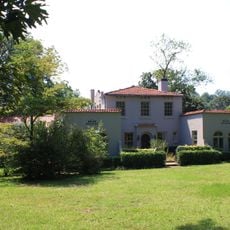
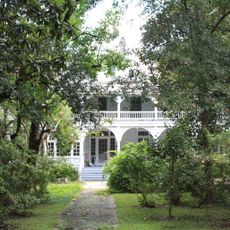
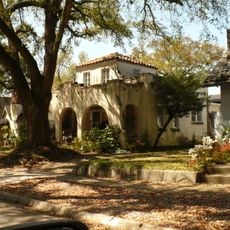
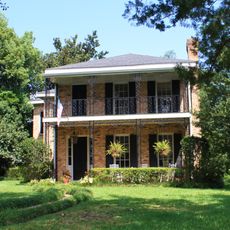
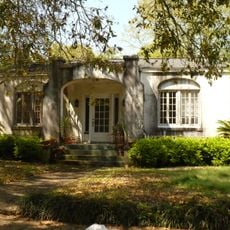
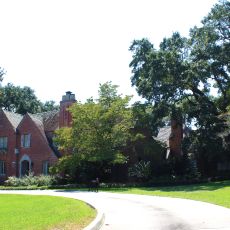
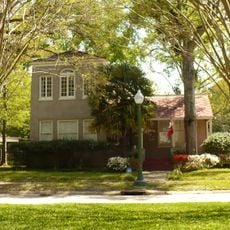
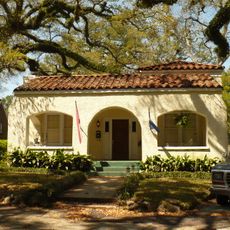
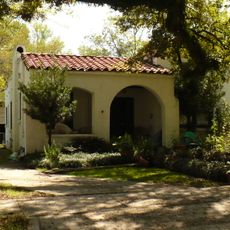
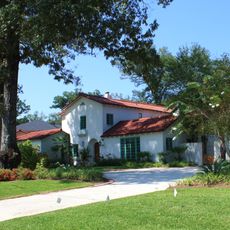
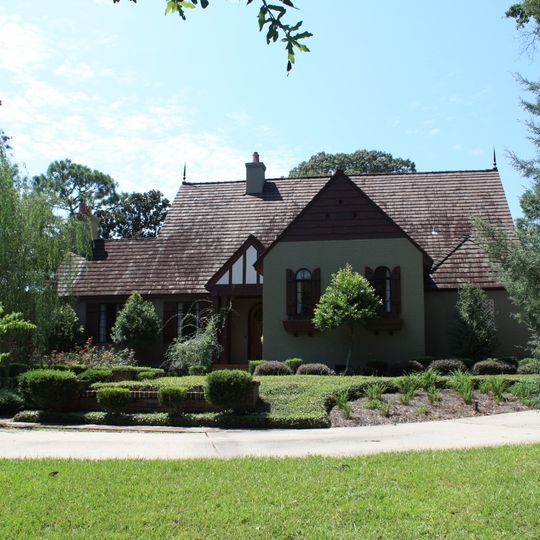
The Ross Knox House is a residential building in Tudor Revival style completed in 1929 in Mobile, Alabama, combining brick and stucco across two stories. The structure features typical details such as steeply pitched gable roofs, half-timbering with stucco infills, tall chimneys, and casement windows that give the entire building its characteristic English appearance.
The house was built in 1929 and designed by architect John Platt Roberts, who applied the Tudor Revival style to the project. Ross Knox acquired the property in 1933, while later Judge Herndon Inge Jr. occupied it from 1959 for over four decades, reflecting the long history of changing owners and their impact on the property.
The house is named after Ross Knox, a businessman who purchased it in 1933 and kept it for about a decade. The Country Club Estates neighborhood was designed in the 1920s as a residential area for upper-class families, and the house reflects this period through its refined architectural approach.
The house is a private residence, so the property should be treated respectfully and visitors should remain unobtrusive in the area. The best views of the architectural details such as rooflines, half-timbering, and windows can be obtained from the street, where the characteristic features of the Tudor style are clearly visible.
Judge Herndon Inge Jr., who owned the house from 1959 onward, was a German prisoner of war during World War II, and his experiences were featured in the documentary The War by filmmaker Ken Burns. This connects the house to a personal wartime history that extends beyond local architectural history.
The community of curious travelers
AroundUs brings together thousands of curated places, local tips, and hidden gems, enriched daily by 91,204 contributors worldwide.