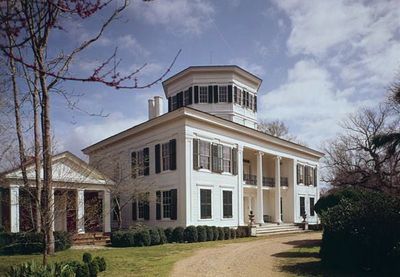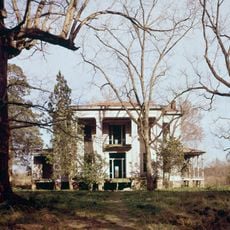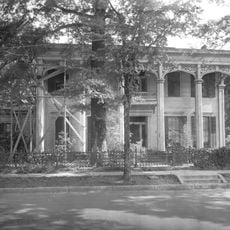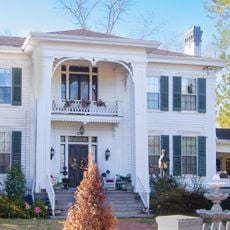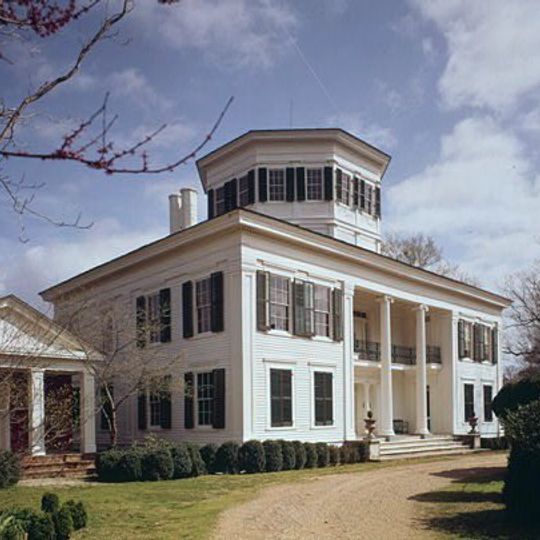
Waverley, Greek Revival mansion in Clay County, Mississippi.
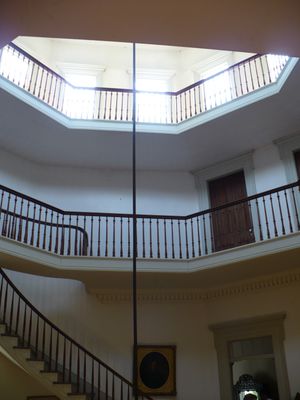
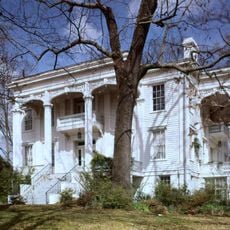
Waverley is a two-story white wooden mansion near West Point with an H-shaped main block, a hip roof and an oversized octagonal cupola rising two more stories. A full-height portico of four plain columns shelters a second-floor balcony, and a lower one-story columned wing extends to the left. Greek Revival features include corner pilasters and a dentillated cornice; inside, four rooms on each level open onto a central octagonal space.
Waverley was built in 1838 for George Hampton Young, a colonel from Georgia, who named it after Sir Walter Scott's novel. From its accepted completion date of 1852 the plantation ran as a self-sustaining community with a brick kiln, cotton gin, ice house and gasworks. After the Young family line ended in 1913 the house declined, and the Robert Snow family began restoring it in 1962. It was declared a National Historic Landmark in 1973.
George Hampton Young, a Georgia colonel, named the house after Sir Walter Scott's novel Waverley. The library hosted the founding of the first fox hunt association in 1893, and the estate is believed to have produced the first American-made saddle blankets. The original gas-fired chandelier still hangs from the cupola.
Waverley stands on the northeast side of Waverley Road, south of Mississippi Highway 50, roughly midway between West Point and Columbus, overlooking the Tombigbee River. The house is open for tours Tuesday through Saturday from 9 am to 5 pm and Sunday from 1 pm to 5 pm.
Waverley's cupola rises two extra stories above the hip roof, an octagonal form the sources call unmatched among Mississippi's antebellum mansions. From its center hangs the original gas-fired chandelier, fed by gas produced from burning pine knots in a retort. The first fox hunt association is said to have formed in the mansion's library in 1893.
The community of curious travelers
AroundUs brings together thousands of curated places, local tips, and hidden gems, enriched daily by 92,998 contributors worldwide.