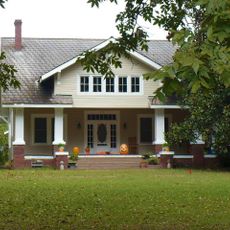
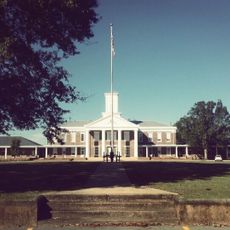
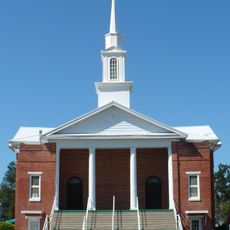
Fairhope Plantation, Historic plantation district in Uniontown, Alabama.
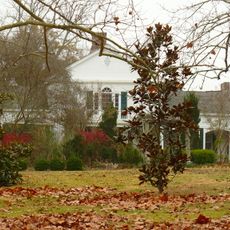
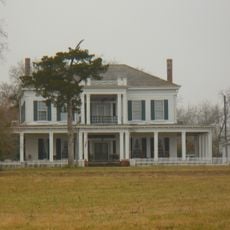
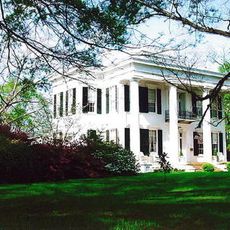
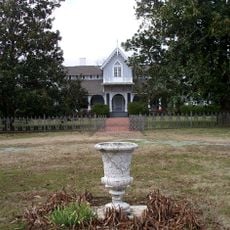
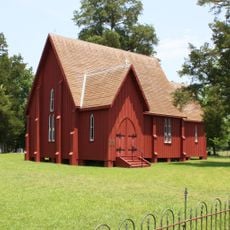
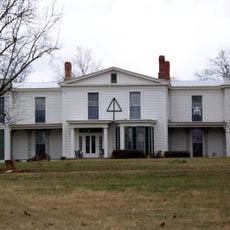
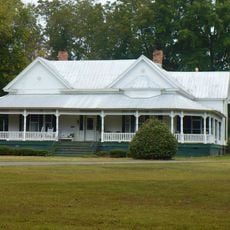
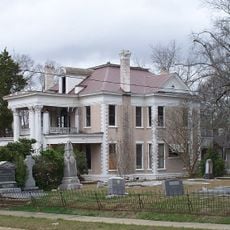
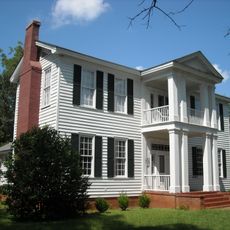
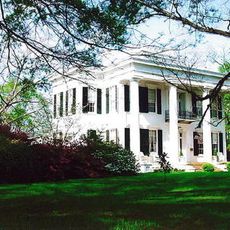
Fairhope Plantation is a historic district one mile east of Uniontown, Alabama, made up of a main house and six contributing buildings. The two-and-a-half-story wood-framed house, built 1857–1861 by Theophilus Gilliam Fowler, has bargeboards on the eaves and gables, hood moldings over doors and windows, octagonal brick chimneys, finials on central gables of all four sides, and a one-story cast-iron veranda around three sides.
Joseph Selden, born in 1831 at Westover Plantation in Virginia, established Fairhope on land given by the family of his wife, Elizabeth Collier Minge, whom he married in 1854. Local builder Theophilus Gilliam Fowler began the main house in 1857 and completed it by 1861. The 1860 census recorded 80 enslaved people at Fairhope. Selden funded an artillery unit, Selden's Battery, during the Civil War; the property stayed with his descendants for a century after his death in 1900.
Local builder Theophilus Gilliam Fowler began the main house in 1857 and finished it by 1861. Architectural historians trace its plan to an enlarged adaptation of a design by Alexander Jackson Davis printed in Andrew Jackson Downing's Cottage Residences of 1842. The Gothic Revival bargeboards, hood moldings and octagonal chimneys are the details to look for.
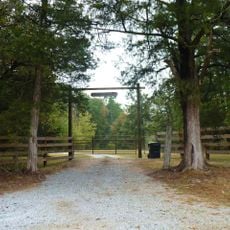
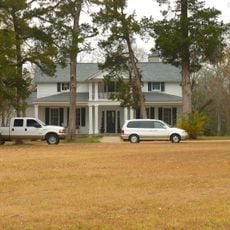
The site is located about one mile outside the center of Uniontown and can be reached by traveling to the rural area nearby. The seven buildings of the property can be viewed from outside, and the architectural details are easiest to see during daylight hours.
The property ranks among roughly 20 surviving structures of this architectural style remaining in Alabama. This rarity makes it a notable example of a nearly disappeared architectural form that was once common in the region.
The community of curious travelers
AroundUs brings together thousands of curated places, local tips, and hidden gems, enriched daily by 92,878 contributors worldwide.