José Martí Anti-Imperialist Platform, Political assembly platform in Plaza de la Dignidad, Vedado, Havana, Cuba
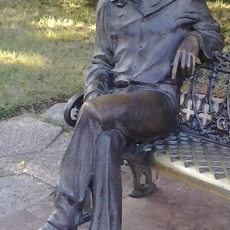
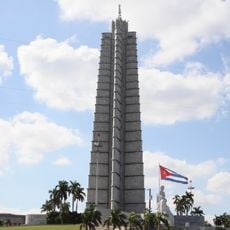
The José Martí Anti-Imperialist Platform is an open-air venue on the Plaza de la Dignidad in Vedado, between the Malecón, Calzada Avenue and N and M streets, facing the U.S. Embassy. It has a stage, steel arches mounted on 2-metre concrete bases, and a monument of 138 black flags with white stars. A statue shows José Martí holding the child Elián González.
Construction began on 15 January 2000 in the Parque 4 de Julio, facing the former US Interests Section, and the venue was inaugurated on 3 April 2000 after only about 80 days of work. It was commissioned by Fidel Castro, with the project led by civil engineer Annia Martínez under architect Maikel Menéndez. Its first rally demanded the return of six-year-old Elián González to his father in Cuba.
The place serves as a gathering spot where locals come together for public assemblies and concerts. It functions as a venue for political speeches and cultural performances that shape community life.
The platform sits in Vedado between the Malecón, Calzada Avenue and N and M streets, directly across from the U.S. Embassy. The stage and crowd area were built for 10,500 seated and 3,000 standing spectators, with open spaces holding up to 100,000. The 2019 renovation demolished the five metal arches and replaced the flag display with a concrete sculpture meant to represent the Cuban flag; work was delayed by material shortages.
The 138 black flags are mounted on 20-meter-tall poles and originally served as a memorial to victims of terrorism. The strategic placement of these flags also creates a visual barrier that blocks the view of the neighboring embassy's message board.
The community of curious travelers
AroundUs brings together thousands of curated places, local tips, and hidden gems, enriched daily by 92,865 contributors worldwide.