Hospital de San Lazaro, Havana, Colonial healthcare institution in Havana, Cuba.
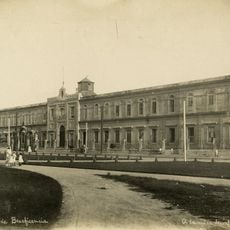
Hospital de San Lazaro was a colonial complex in Havana featuring a central church surrounded by medical buildings, patient wards, and open courtyards arranged across the site. The layout separated different functions into distinct structures while maintaining a unified overall design.
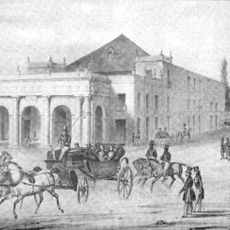
Philip V ordered the Royal Hospital of San Lázaro founded by royal decree on June 19, 1714, after chaplain Juan Pérez de Silva and Dr. Francisco Teneza petitioned him over the plight of leprosy patients. The two-story leprosarium with its church was completed at the Caleta de Juan Guillén in 1781. Cyclones and the exposed cove damaged it, and on December 26, 1916 the patients were moved to the Mariel lazaretto.
The hospital church became a pilgrimage site for leprosy patients and followers of San Lázaro, also known as Babalú Ayé in the Afro-Cuban Santería tradition. The two-story building's monumental facade served as the front of the church at its center. On December 17, pilgrims still visit the church of the leper colony at Rincón, where patients were moved in 1917.
The hospital stood on Calle Aramburu between Calles Jovellar and San Lázaro, near the Espada Cemetery and the San Dionisio asylum. The Caleta de Juan Guillén in front of it was filled in during the first construction of the Malecón in 1901. The site now lies within Cayo Hueso, a ward of Centro Habana, and the former Casa de Beneficencia grounds hold the Hermanos Ameijeiras Hospital.
The church was wrapped in several layers of walls, a design meant to withstand the cyclones that hit the exposed cove before the Malecón was built in 1901. A catwalk over the rooms gave access to windows in the front exterior wall.
The community of curious travelers
AroundUs brings together thousands of curated places, local tips, and hidden gems, enriched daily by 94,017 contributors worldwide.