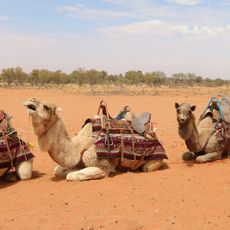
Huckitta, Pallasite meteorite find site in Northern Territory, Australia
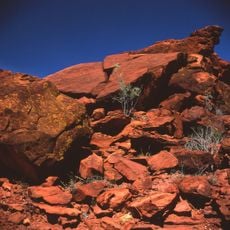
Huckitta is a pallasite meteorite found in 1937 at Huckitta Cattle Station in the Northern Territory. Its main mass weighed 1,411.5 kilograms, and over 900 kilograms of iron shale were recovered with it. The metal is largely oxidized into maghemite and goethite, and the olivine crystals are often altered.
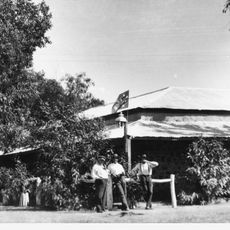
In 1924 Herbert Basedow found a 1,084-gram mass on Burt Plain, 17 km north of Alice Springs, later called Alice Springs. In July 1937 Cecil Madigan recovered the 1,411.5-kilogram main mass at Huckitta, along with over 900 kilograms of iron shale. The Alice Springs mass was then paired with it as a transported fragment.
The main mass, 1,411.5 kg, is held at the Adelaide Planetarium of the University of South Australia. Other pieces are in the Monnig collection in Fort Worth, at Arizona State University, the Natural History Museum in London, the Max Planck Institute in Mainz, the Smithsonian in Washington and the Field Museum in Chicago.
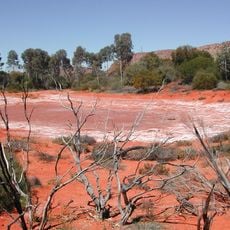
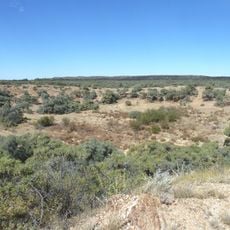
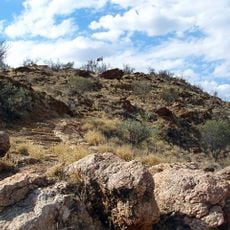
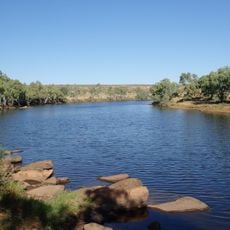
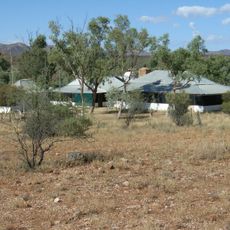
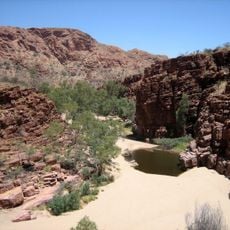
The site is located in a remote inland area and requires preparation such as adequate water and a sturdy vehicle. The best time to visit is during cooler months to avoid challenges from extreme heat.
The 1,084-gram mass found by Herbert Basedow on Burt Plain in 1924 was named Alice Springs; in 1937 it was paired with the 1,411.5-kilogram Huckitta mass and treated as a transported fragment of the same fall. The main mass is held at the Adelaide Planetarium, University of South Australia.
The community of curious travelers
AroundUs brings together thousands of curated places, local tips, and hidden gems, enriched daily by 94,001 contributors worldwide.