Queen’s Staircase, Historical limestone stairway in Nassau, Bahamas
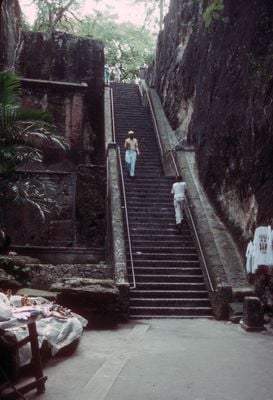
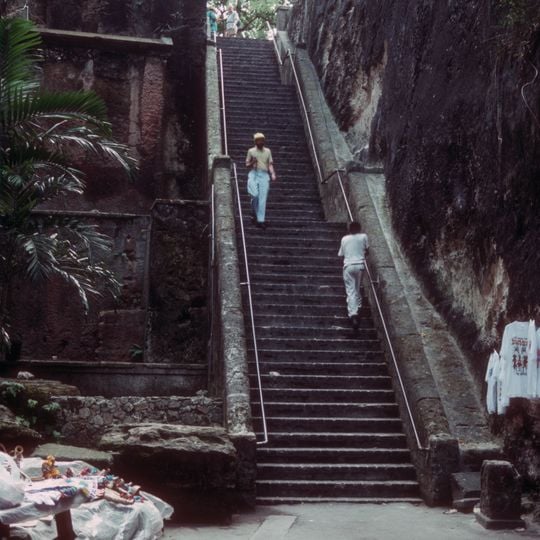
The Queen's Staircase is a flight of 65 steps cut through solid limestone in Nassau, rising 102 feet (31 m) from a walkway between high stone walls up to Fort Fincastle on Bennet's Hill. Stone parapets with metal handrails flank the grey steps, and water runs alongside them down to a pool below.
In 1793, 600 enslaved people began carving a staircase and road through solid limestone to link Fort Fincastle, completed that year, with Nassau below. Working with limited tools, they cut the steps directly into the rock. The passage was later named in the 19th century for Queen Victoria, who ended slavery in the British Empire.
The name honors Queen Victoria, whose reign saw the end of British slavery in 1834. Today vendors and visitors use this tree-lined passage to move between two levels of the town.
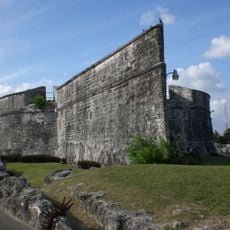
The staircase lies within the Fort Fincastle Historic Complex and leads up to the fort on Bennet's Hill, next to Princess Margaret Hospital. Water runs alongside the steps down to a pool at the base. The climb is shaded by high stone walls and tropical trees.
Tour guides often tell visitors that the 65 steps match the years Queen Victoria reigned, but she ruled from 1837 to 1901, a little under 64 years. The staircase was carved in 1793–1794 by 600 enslaved people working solid limestone with limited tools. Water still cascades alongside the steps down to a pool below.
The community of curious travelers
AroundUs brings together thousands of curated places, local tips, and hidden gems, enriched daily by 93,766 contributors worldwide.