Fort De Soto Park, Protected coastal area in Pinellas County, United States.
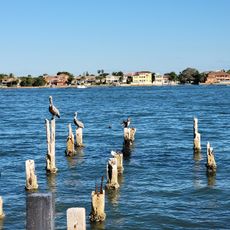
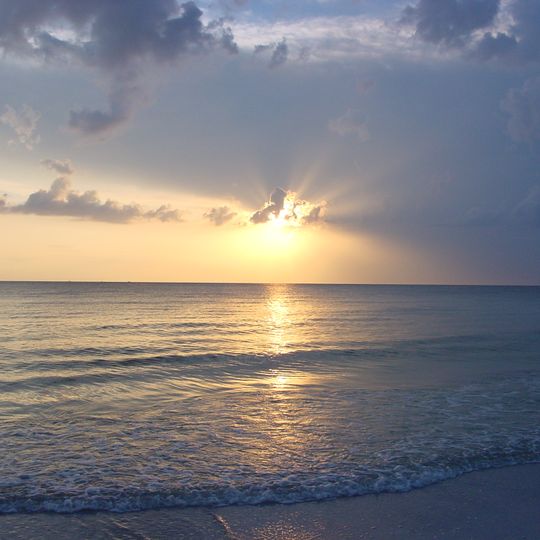
Fort De Soto Park is a protected coastal area with white sand, mangrove forests, and waterfront trails along the Gulf of Mexico. The site connects five islands with paths winding through different natural habitats.
Construction of Fort De Soto began in November 1898 and was completed in 1906, using a seashell concrete formula for the foundation and a mix of seashell, stone and concrete for walls and ceilings. Named in 1900 for Hernando de Soto, it was a subpost of Fort Dade on Egmont Key, held Batteries Laidley and Bigelow with 12-inch coast defense mortars, and comprised 29 buildings. Active from 1898 to 1910, it was deactivated with Fort Dade in 1922 and disarmed by 1926, apart from four mortars of Battery Laidley.
The park is a gateway site on the Great Florida Birding Trail, and birders watch from the beaches and trails of the five keys. The name Mullet Key recalls the Tocobaga, who lived on these barrier islands from about 1000 to 1500 and ate fish, clams, conch, oysters and whelks from the Gulf. A museum exhibit in the park covers the military past.
An admission fee is charged at the park entrance, and the site offers camping areas and boat ramps for visitors with their own watercraft. The trails work for walking and cycling, and several fishing piers are scattered across the grounds.
The fort's walls and foundations were poured using a seashell concrete formula, with stone and shells mixed into the walls and ceilings. The post also had brick roads, concrete sidewalks and a narrow-gauge railroad for hauling supplies. In 1917 four of its 12-inch mortars were disassembled and shipped to Fort Rosecrans in San Diego.
The community of curious travelers
AroundUs brings together thousands of curated places, local tips, and hidden gems, enriched daily by 94,078 contributors worldwide.