Mount Royal, Archaeological site on St. Johns River near Lake George, Florida
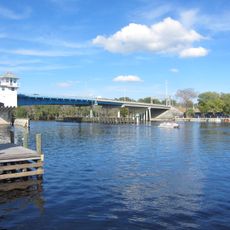
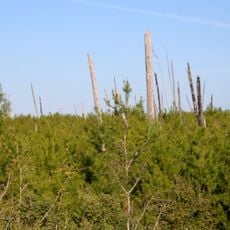
Mount Royal is an archaeological site located on the banks of the St. Johns River in Florida, featuring a large earthen mound constructed from sand. The mound rises significantly above the surrounding wetlands and forms a distinctive landmark along the waterway.
Occupation began around 2000 BCE with Orange-period hunter-gatherers. After a long gap from 500 BCE to 750 CE, the site was reoccupied and after 1050 became the main town of a chiefdom linked to the Mississippian culture. It declined after 1300 but was still inhabited in the 1560s, when it belonged to the Timucua chiefdoms of Utina and Agua Dulce. In 1616 Enacape became the administrative center of Agua Dulce, where the Spanish founded the mission of San Antonio de Enacape, which lasted until after 1656.
The Bartrams recorded the mound and its avenue in 1766, and William Bartram returned 15 years later to find the orange grove, palms and live oaks flanking the avenue cleared for planting. In the 1560s the town was part of the Timucua chiefdoms of Utina and Agua Dulce; in 1616 Enacape became the administrative center of Agua Dulce, where the Spanish established the mission of San Antonio de Enacape, which lasted until after 1656.
The mound sits on a 1-acre parcel owned by the State of Florida, while the surrounding middens and village area lie within the Mount Royal Airpark residential development. Access is via County Road 309, three miles south of Welaka. The avenue and rectangular pond described in the 18th and 19th centuries are no longer visible from the ground.
Excavations in the 1890s uncovered numerous copper items, shells, and pottery at the mound. These discoveries suggest that the community maintained trade relationships with distant coastal areas.
The community of curious travelers
AroundUs brings together thousands of curated places, local tips, and hidden gems, enriched daily by 93,781 contributors worldwide.