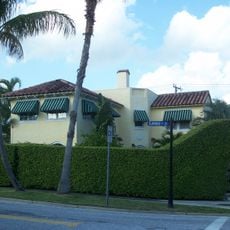
Mango Promenade Historic District, Historic residential district in West Palm Beach, Florida.
Mango Promenade Historic District is a residential area in West Palm Beach containing about 125 historic buildings bounded by South Dixie Highway, Austin Lane, Coconut Lane, and Cranesnest Way. The homes represent different architectural styles and periods, showing how building traditions evolved over time in this settled neighborhood.
Benjamin Lanehart founded the first permanent non-indigenous settlement here in 1875, initially using the land for pineapple growing operations. Over the following century, the area gradually transformed from an agricultural outpost into an established residential neighborhood with growing numbers of family homes.
The name comes from the mango groves of the early settlement, not from trees still lining the streets. The district's platting began on November 18, 1913, when Bror J. Carlberg, a charter member of the West Palm Beach Chamber of Commerce, filed the first plat along Vallette Way. Later plats added Wildermere Road, Sophia Drive, Victoria Road, Cranesnest Way and Croton Way.
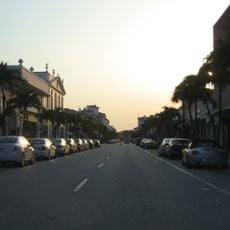
The area is best explored on foot, with wide tree-lined streets that are easy to walk through. Visitors will find nearby schools, shops, and parks that make it convenient to spend time here and get a full sense of daily life in the neighborhood.
The district's oldest surviving building, at 318 Cranesnest Way, dates to about 1910. By 1926 roughly 89% of the homes had been built, and construction then stalled during the Great Depression until New Deal banking and refinancing laws revived it. The last plat, Queens Court of the Baldwin-Nichols Subdivision, was filed in July 1936.
The community of curious travelers
AroundUs brings together thousands of curated places, local tips, and hidden gems, enriched daily by 92,640 contributors worldwide.