Nocoroco, Archaeological site in Volusia County, Florida, United States.
Nocoroco is an archaeological site on Florida's eastern coast in Volusia County where researchers have uncovered remains and artifacts spanning different periods of occupation. The location holds evidence from indigenous communities that once lived in the region and shaped the area over centuries.
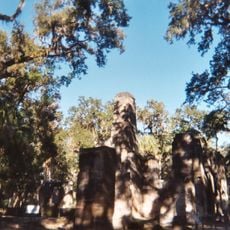
Nocoroco was a Timucuan village on the Tomoka River, visited by the Spaniard Alvaro Mexia in 1605 during the late St. Johns period. From 1763 the village site formed part of the British land grant Mt. Oswald, held by Richard Oswald, whose plantation grew indigo and rice. After Florida returned to Spain in 1783 the land was likely farmed until plantations were destroyed near the start of the Second Seminole War in 1835. It was listed on the National Register of Historic Places on May 7, 1973, for its potential to inform on aboriginal history.
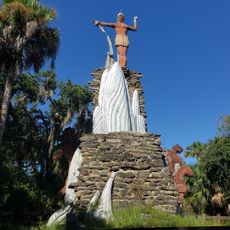
The village name Nocoroco survives through Spanish records; Alvaro Mexia reached the site in 1605, when European acculturation among the Timucua had just begun. Today the village site is marked by the Tomokie Fountain, a sculpture by Frederick Dana Marsh illustrating the legend of Tomokie, whose references at the site date back over a century.
Access to the site is restricted since it remains an active archaeological research location requiring protective measures. Check with local authorities before visiting to learn about any tours or specific access requirements that may apply.
Artifacts at this location reveal how people obtained food and created tools, offering direct insight into their daily routines and survival strategies. These material clues allow researchers to piece together social structures and everyday life of the prehistoric inhabitants.
The community of curious travelers
AroundUs brings together thousands of curated places, local tips, and hidden gems, enriched daily by 94,657 contributors worldwide.