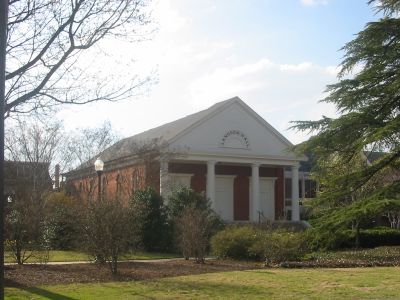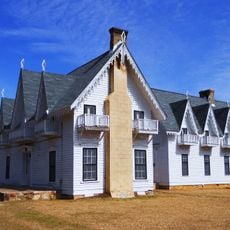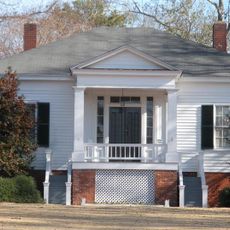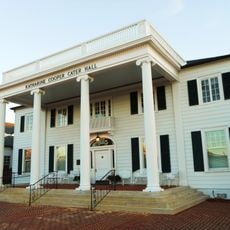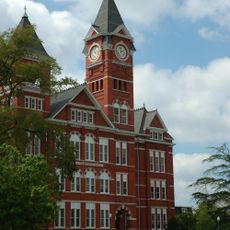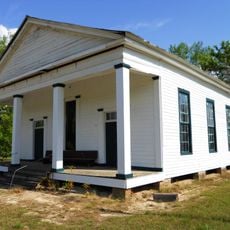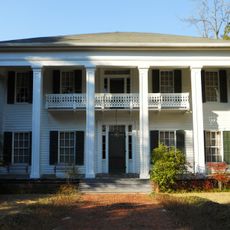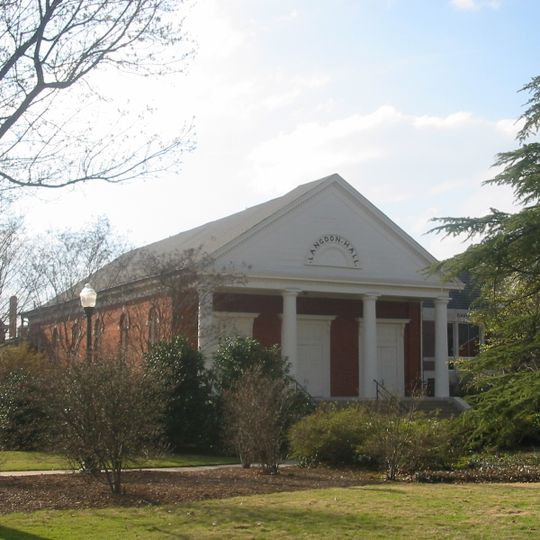
Langdon Hall, Greek Revival building at Auburn University, Alabama, United States.
Langdon Hall is a two-story structure with classical elements, featuring symmetrical columns and traditional architectural details from the Greek Revival period. The building houses administrative offices and a large auditorium that continues to serve events and gatherings on campus.
The building was originally constructed in 1846 as a chapel for Auburn Female College and was relocated to Auburn University campus in 1883. During the Civil War, it served a medical function caring for military personnel.
The hall served as a gathering place where the university community came together for important discussions and public speaking events. Visitors can still sense its role as a space where students and faculty participated in shared intellectual and social experiences.
The building sits on the main campus and is easily accessible on foot with clear pathways and signage throughout the area. Visitors may encounter crowds during academic events and peak hours, so arriving early or planning accordingly can enhance the experience.
The basement once housed a chemistry laboratory where professor John M. Darby developed and produced a chemical disinfectant that later gained widespread use in medical practice. This work was a significant contribution to early antiseptic innovation on campus.
The community of curious travelers
AroundUs brings together thousands of curated places, local tips, and hidden gems, enriched daily by 60,000 contributors worldwide.