Lime Point Light, Navigational lighthouse at Golden Gate Strait, California, US
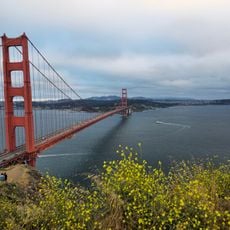
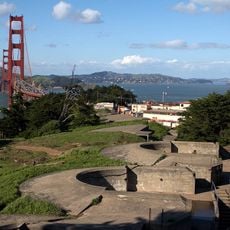
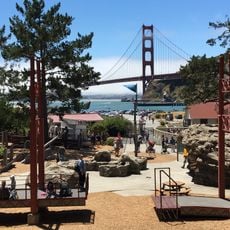
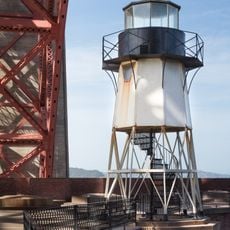
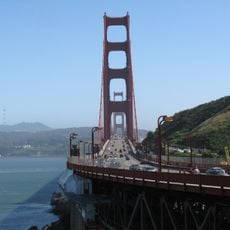
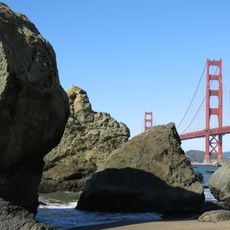
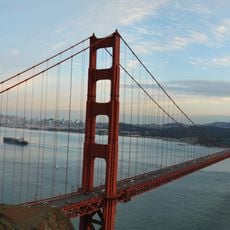
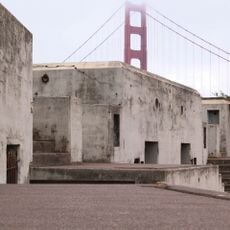
Lime Point Light is a lighthouse built in 1883 as a fog-signal station on a rock spur about 100 feet (30 m) long and 20 feet (6 m) wide at the northern foot of the Golden Gate Bridge. The surviving brick fog-signal building, later fitted with a light, stands beside the bridge's north anchorage; the keeper's quarters and other structures were demolished after automation in 1961.
Built in 1883 as a one-story fog-signal station with a two-story dwelling for two keepers and their families, Lime Point began with two steam horns whose fire chamber consumed over 150,000 pounds of coal a year. A light was added on 26 November 1900, and in 1903 experiments with petroleum began; the station was electrified in 1932. The United States Army added a rectangular searchlight building in 1910, and the Lighthouse Board linked Point Diablo Light to Lime Point by telephone and power cable in 1923 so keepers could operate it remotely. The Coast Guard took over in 1939 and automated the station in 1961, after which the dwelling and other buildings were demolished.
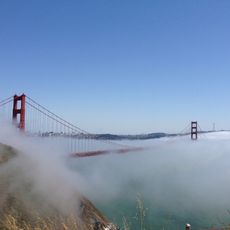
The station's foghorn also served as a rescue signal: keepers sounded five or six short blasts followed by one long blast to alert the Fort Point lifeboat crews across the strait to a wreck. The surviving fog signal building is described as the last of its kind in California in its original condition.
Visitors can see the lighthouse from Vista Point parking area on Highway 101, just after crossing the Golden Gate Bridge heading north. The parking area provides a clear view of the structure and the surrounding waterway.
In 1960, the cargo ship India Bear collided with the lighthouse during dense fog, causing structural damage to both the vessel and the facility.
The community of curious travelers
AroundUs brings together thousands of curated places, local tips, and hidden gems, enriched daily by 92,759 contributors worldwide.