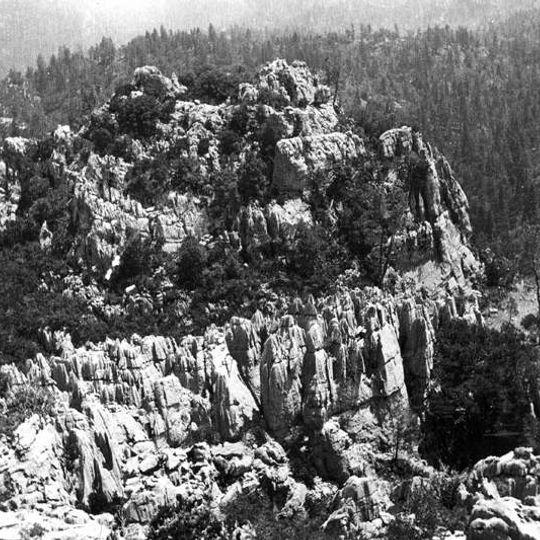
Hosselkus Limestone, Marine limestone formation in Plumas and Shasta Counties, California.
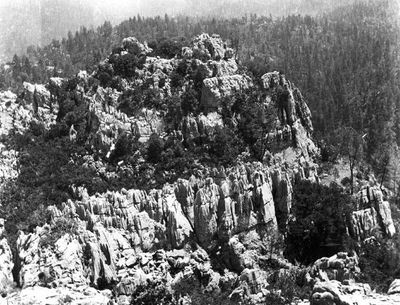
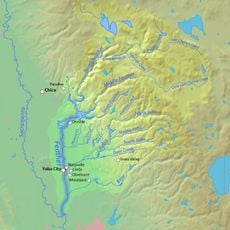
The Hosselkus Limestone is an Upper Triassic marine micritic limestone formation exposed in Plumas and Shasta Counties, California. Its geologic column near Taylorsville is 140 ft thick and of early Karnian age. It is well exposed near the Cosmopolitan mine on the divide between Genesee Valley and Hosselkus Creek, and outcrops from Spanish Ranch to Prattville and beyond Pit River in the Klamath Mountains.
The Hosselkus Limestone is an Upper Triassic (early Karnian) marine micritic limestone, about 140 ft thick in the Taylorsville column. It lies above the Swearinger slates and below the Trail beds. Its age is fixed by abundant Arcestes and pentagonal crinoid stems. Over 208 invertebrate species, including ammonites and nautilus, have been described from the formation and nearby Brock Mountain.
The formation draws scientific interest as a window into what the region looked like when warm seas covered California. Visitors walking through the area can observe rock layers that tell the story of this submerged world.
The formation is exposed near the Cosmopolitan mine on the divide between Genesee Valley and Hosselkus Creek, and at outcrops between Spanish Ranch and Prattville. Access is on foot over unmaintained ground; the 140 ft section is best examined where the rock is freshly broken. Collecting rules on public land should be checked before removing fossils.
The formation's cephalopod fauna links California to the ancient Tethys: many species also occur in the Mediterranean, and Trachyceras is abundant here although it had died out in the Mediterranean before the Tropites fauna arrived. The outcrops split into a lower Trachyceras subzone and an upper subzone with Juvavites and Arcestes.
The community of curious travelers
AroundUs brings together thousands of curated places, local tips, and hidden gems, enriched daily by 93,632 contributors worldwide.