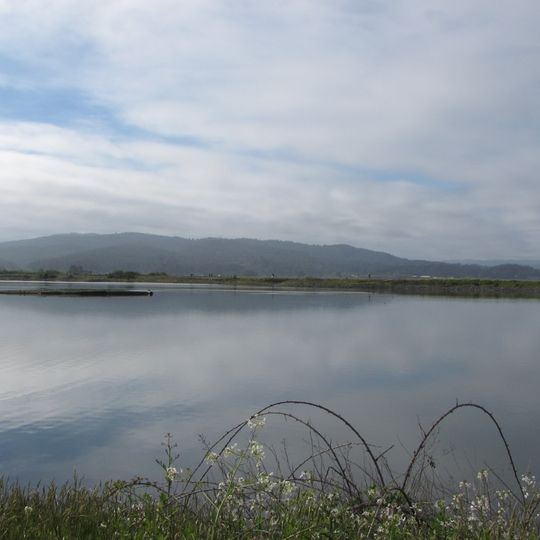
Arcata Wastewater Treatment Plant and Wildlife Sanctuary, Wastewater treatment facility and wildlife sanctuary in Arcata, United States.
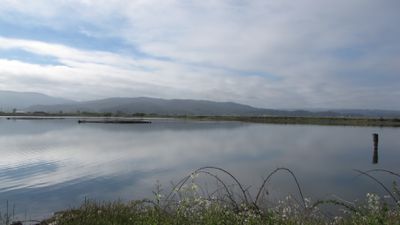
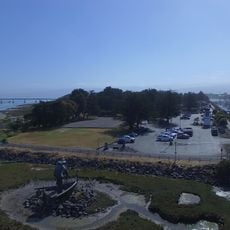
The Arcata Wastewater Treatment Plant and Wildlife Sanctuary is a wastewater treatment facility and wildlife refuge in Arcata, California, where a series of oxidation ponds, treatment wetlands and enhancement marshes filter sewage. The marsh covers 307 acres along the Pacific Flyway, with open-air lakes named after donors and citizens such as Cal Poly Humboldt professors George Allen and Robert A. Gearheart.
Primary sedimentation tanks were completed in 1949, oxidation ponds followed in 1957, and chlorination with dechlorination in 1966. Tertiary treatment through artificial marshes, cleansed by reeds, cattails and bacteria, was completed in 1986. Cal Poly Humboldt professors George Allen and Robert A. Gearheart helped create the marsh, and in 1969 Allen began an aquaculture project there raising salmonids in mixtures of sea water and partially treated wastewater.
The site draws birdwatchers from across the region who come to observe over 300 bird species moving through throughout the year. This has made it a gathering point for people interested in local avian life and wetland ecosystems.
The grounds are open daily from sunrise until one hour after sunset for self-guided exploration. Free guided walks are offered regularly and can help visitors get a better sense of what lives in each part of the site.
Arcata was one of the first cities in the United States to deliberately use wetlands as part of its wastewater treatment process, drawing attention from cities around the world. The model was later adopted by other communities looking for ways to combine infrastructure with conservation.
The community of curious travelers
AroundUs brings together thousands of curated places, local tips, and hidden gems, enriched daily by 92,781 contributors worldwide.