St. Johns Bridge, Suspension bridge in Portland, Oregon, United States.
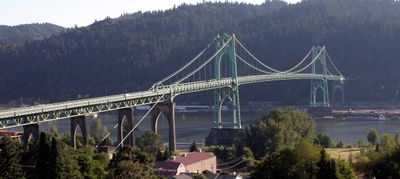
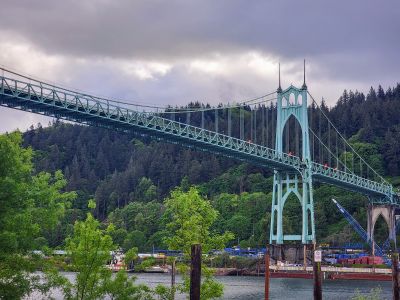
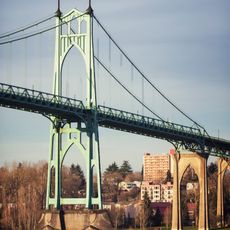
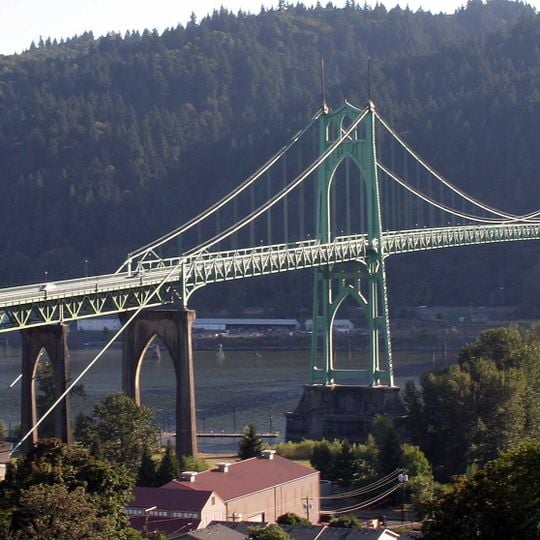
The St. Johns Bridge is a steel suspension structure spanning 1,207 feet across the Willamette River, featuring twin Gothic-style towers that rise 400 feet above the water and supporting vehicular, bicycle, and pedestrian traffic on U.S. Route 30 Bypass.
Completed in 1931 and designed by David B. Steinman and Holton D. Robinson, the bridge became the longest suspension span west of Detroit at the time, providing employment during the Great Depression and replacing a ferry service that carried about 1,000 vehicles daily.
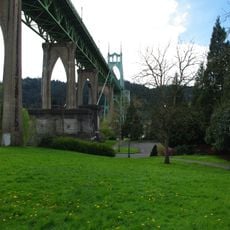
The bridge's Gothic tower arches inspired the name of adjacent Cathedral Park, and it serves as a popular photography location for residents and visitors, representing Portland's engineering heritage and contributing to the city's architectural identity along the Willamette River.
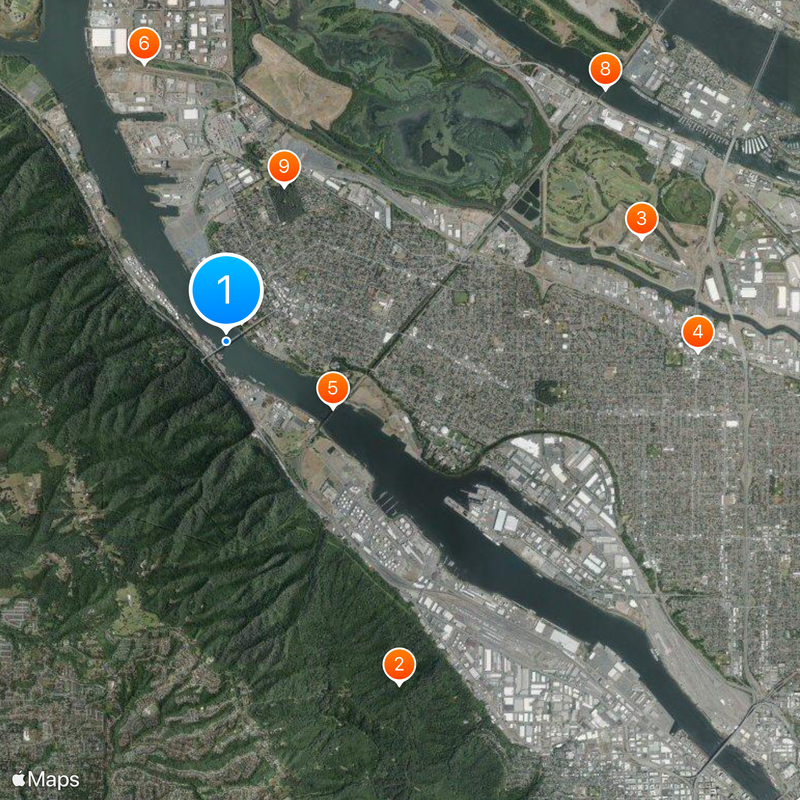
The bridge connects North and Northwest Portland, carrying traffic on U.S. Route 30 Bypass with sidewalks and bike lanes, and underwent major rehabilitation in 2005 that replaced the deck, waterproofed cables, and upgraded lighting for continued safe operation.
The bridge features verde green coloring chosen by its designer to enhance photographic visibility in overcast conditions and to complement the surrounding landscape, making it stand out from typical black or grey bridge coatings used in other structures.
The community of curious travelers
AroundUs brings together thousands of curated places, local tips, and hidden gems, enriched daily by 91,327 contributors worldwide.