Kubota Garden, Japanese garden in Rainier Beach, Seattle, US
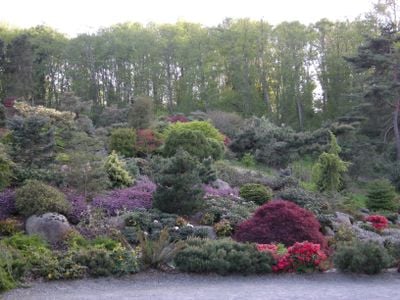
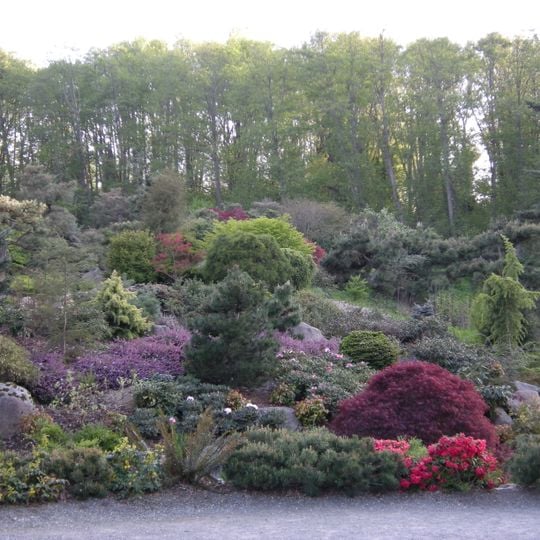
Kubota Garden is a sprawling landscape with hills, valleys, streams, waterfalls, ponds, stone bridges, and rock formations, surrounded by Pacific Northwest and Japanese plants. The design uses natural terrain changes to guide water through different sections of the space.
Fujitaro Kubota, who emigrated from Shikoku in 1907, bought 5 acres of swampland in Rainier Beach in 1927 and expanded it to 30 acres by 1930. During World War II the garden was abandoned for four years while Kubota and his family were interned at Camp Minidoka in Idaho. After the war he and his sons Tak and Tom rebuilt the business and the garden, and in 1972 Japan awarded him the Fifth Class Order of the Sacred Treasure.
Fujitaro Kubota opened the garden to the public and wanted Americans to understand Japanese gardening; the Kubota Garden Foundation, founded in 1989, continues that aim. The garden served as a social and cultural centre for Seattle's Japanese community, and the Japanese government awarded Kubota the Fifth Class Order of the Sacred Treasure in 1972 for introducing Japanese gardening to the region.
Main paths are hard-packed gravel, so wheels and strollers roll with difficulty; the Tom Kubota Stroll Garden alone reaches the Terrace Overlook by wheelchair-accessible route. Portable toilets stand near the entrance, and dogs are allowed. Benches and picnic tables are placed along the way. The Terrace Overlook can be reserved for weddings or photoshoots, closing that area to others while the rest stays open.
The Mountainside section features multiple waterfalls cascading down stone pathways that connect a series of ponds through natural terrain changes. This arrangement demonstrates how the former swampland was transformed into a water-centered landscape.
The community of curious travelers
AroundUs brings together thousands of curated places, local tips, and hidden gems, enriched daily by 93,784 contributors worldwide.